

What is the difference between cyclical and defensive stocks?
Cyclical stocks rise and fall with economic conditions, delivering strong returns during expansions but declining in recessions. Defensive stocks maintain stability regardless of economic cycles, providing consistent performance even during market downturns. Understanding this fundamental difference empowers you to build an investment portfolio aligned with your risk tolerance and financial objectives.
TL;DR Summary
- Cyclical stocks: Excel during economic booms but struggle in recessions (examples: automotive, travel, retail).
- Defensive stocks: Deliver steady returns across all economic conditions (examples: utilities, healthcare, consumer staples).
- Volatility: Cyclical stocks experience high volatility; defensive stocks offer comparative stability.
- Optimal strategy: Blend both types based on your risk profile and current market trends.
- Portfolio balance: Technology and consumer discretionary represent cyclical plays, while food and energy providers offer defensive stability.
I. Introduction to Stock Market Investing
Stock market investing resembles navigating dynamic waters—waves of volatility, shifting market trends, and economic currents constantly influence your portfolio performance. However, mastering fundamental principles transforms these unpredictable waters into manageable investment opportunities. One crucial concept involves understanding how different stock types respond to economic cycle changes.
At the foundation lies the relationship between cyclical and defensive stocks. These classifications react differently to changing economic conditions, and your choice between them—or strategic combination of both—significantly impacts your long-term returns and short-term portfolio stability.
Cyclical stocks flourish when economies expand but face vulnerability during recessions. Conversely, defensive stocks function like portfolio anchors—dependable and resilient, weathering turbulent markets with minimal disruption. We’ll examine how to identify these stock types, understand their behavior across economic cycle phases, and implement intelligent strategies for incorporating them into your investing approach.
II. Differentiating Cyclical and Defensive Stocks
Let’s examine what fundamentally separates cyclical and defensive stocks in your investment strategy.
Cyclical stocks represent companies whose earnings directly correlate with broader economic performance. Consider industries like travel, luxury goods, or construction—consumer spending increases during prosperous times and contracts during economic downturns.
Defensive stocks encompass companies providing essential goods or services that maintain consistent demand regardless of economic conditions. These include healthcare providers, grocery chains, and utility companies—businesses that thrive steadily because their products remain necessary across all economic cycles.
Here’s your strategic advantage: understanding how these stocks perform during different economic cycle phases enables you to anticipate where opportunities and risks emerge based on current market trends and economic indicators.
| Difference | Cyclical Stocks | Defensive Stocks |
|---|---|---|
| Economic Sensitivity | Highly sensitive | Low sensitivity |
| Risk Level | High | Low |
| Performance in Recession | Poor | Stable |
| Common Sectors | Travel, automotive, luxury | Healthcare, utilities, staples |
III. Characteristics and Examples of Cyclical Stocks
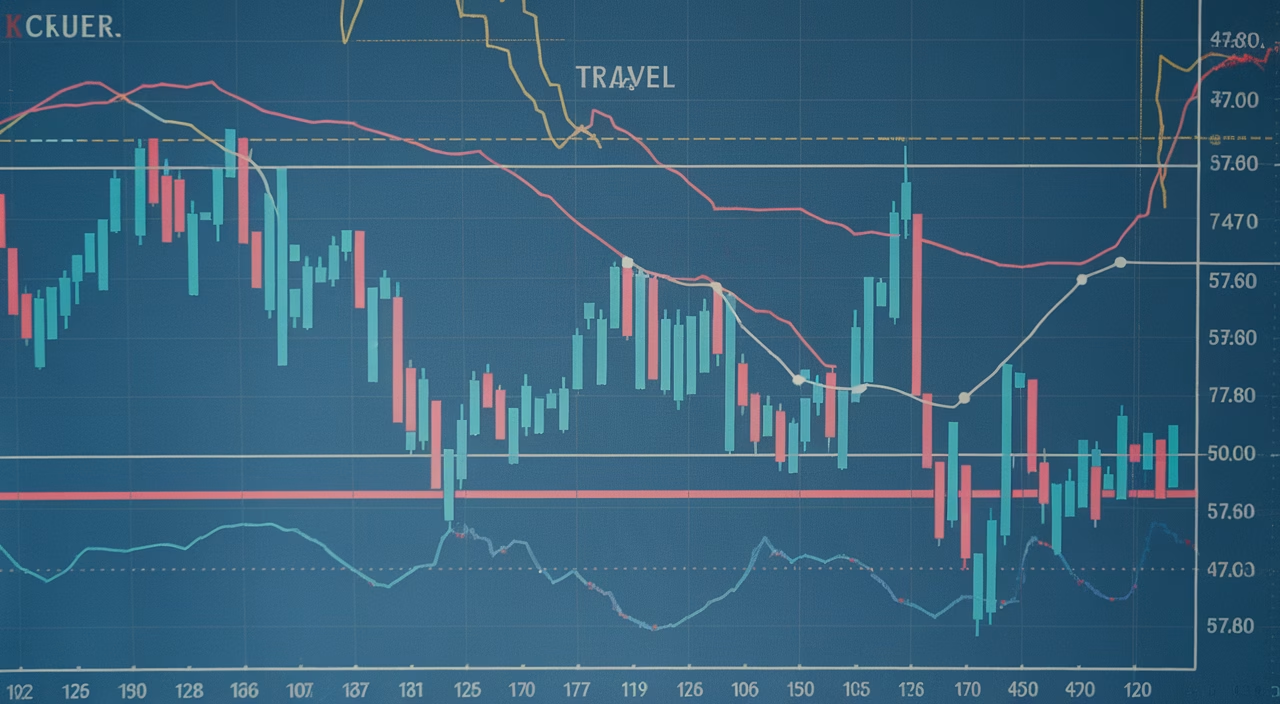
To master how cyclical stocks behave, examine the automotive industry as a prime example. When economies accelerate—featuring GDP growth, job creation, and rising consumer confidence—people invest in car upgrades, home improvements, and vacation spending. These economic expansion periods create prime opportunities for cyclical stocks.
However, when economic tides reverse during recessions, you’ll observe earnings decline and stock prices fall significantly.
Key characteristics of cyclical stocks include:
- Revenue patterns directly tied to economic conditions and consumer spending
- High volatility in stock performance based on discretionary consumer demand
- Elevated beta coefficients compared to overall market averages
How to identify cyclical stocks by sector:
- Automotive industry: Car manufacturers depend heavily on big-ticket consumer discretionary spending patterns
- Airlines and travel: Performance correlates strongly with disposable income levels and consumer confidence
- Retail fashion and luxury: Consumers reduce luxury purchases first when economic uncertainty increases
- Construction and housing: Interest rate changes and investor sentiment significantly impact performance
In practical application, experienced investors often target cyclical stocks during early economic recovery stages. These companies are positioned to benefit substantially as consumer confidence rebuilds and GDP growth accelerates, making them attractive opportunities for growth-focused portfolios.
IV. Exploring Defensive Stocks as Investment Options
Now let’s examine the stability-focused counterparts: defensive stocks. While cyclical stocks ride economic waves, defensive stocks provide portfolio foundation—buffering your investments during economic storms and market volatility.
Defensive stocks typically operate in sectors providing essential products and services that consumers require regardless of economic conditions. Consider utilities or grocery stores—whether your financial situation is strong or constrained, electricity must flow and food must be available.
Essential characteristics of defensive stocks:
- Consistent earnings performance and reliable dividend payments
- Low correlation with economic cycle fluctuations and market volatility
- Attractive investment options for risk-averse or income-focused portfolio strategies
Best defensive stocks to buy commonly include:
- Utilities sector: Consistent demand for electricity, water, and natural gas services
- Consumer staples: Essential household products like cleaning supplies, food, and personal care items
- Healthcare companies: Medical services and pharmaceutical products maintain non-negotiable demand
In market practice, we observe investors rotating capital into defensive positions during uncertainty periods or when recession indicators emerge. These stocks offer peace of mind through stable dividend income and predictable, albeit modest, returns that help preserve capital during challenging economic conditions.
V. Strategies for Successful Investment in Cyclical and Defensive Stocks

Successfully investing in cyclical versus defensive stocks requires strategic balance, market timing awareness, and alignment with your investment objectives and risk tolerance.
Here’s your comprehensive approach for maximizing returns while managing volatility:
1. Align strategy with economic cycle phases. During early economic expansion periods, increase cyclical stock allocation for enhanced growth potential. During economic contractions or high uncertainty phases, shift emphasis toward defensive positions for stability.
2. Implement diversification within each category. Avoid concentration risk by spreading cyclical investments across multiple sectors like retail, housing, technology, and transportation. Apply the same diversification principle to defensive holdings, including both healthcare and utilities exposure.
3. Monitor economic indicators and market trends. Track leading indicators including manufacturing output, employment reports, and consumer confidence surveys. Rising indicators suggest cyclical opportunities, while declining trends favor defensive positioning.
4. Match investments to your risk profile. Younger investors with longer time horizons may emphasize growth through cyclical stocks despite higher volatility. Investors nearing retirement typically prioritize capital preservation and stable income through defensive allocations.
The strategic art involves creating balanced portfolio exposure incorporating both categories. For example, pairing a high-growth travel stock with a stable utility company provides both upside potential and downside protection, optimizing your risk-adjusted returns across market conditions.
VI. Conclusion: Building a Diversified Portfolio
The distinction between cyclical and defensive stocks serves as your investment compass rather than a binary choice. Success comes not from selecting one category over another, but from understanding how they complement each other in building a resilient portfolio.
Just as skilled captains adjust sails based on weather conditions, successful investors adjust portfolio allocation based on economic signals and market trends. A well-constructed diversified portfolio incorporates both growth-oriented cyclical opportunities and income-stable defensive foundations. Your ultimate objective: implementing smarter investing strategies with reduced guesswork and enhanced confidence.
Now that you understand the characteristics, examples, and strategic applications of both stock types, you’re equipped to make informed investment decisions aligned with your financial goals—regardless of future market conditions or economic cycle phases.
Cost Guide: Typical Price Movements and Investment Entry Points
| Stock Type | Low-End Valuation (P/E) | Mid-Range | High-End |
|---|---|---|---|
| Cyclical Stocks | 8–12x | 13–18x | 18–25x |
| Defensive Stocks | 10–14x | 15–20x | 20–28x |
Frequently Asked Questions
- What is the difference between cyclical and defensive stocks?
Cyclical stocks fluctuate with the economy, while defensive stocks stay relatively stable, regardless of market conditions. - How can I identify cyclical stocks?
Look for companies whose earnings depend on disposable income and economic expansion, such as travel or automotive sectors. - What are examples of defensive stocks?
Companies in sectors like utilities, healthcare, and consumer staples—services people use regardless of economic conditions. - Should I include both in my portfolio?
Yes. A well-balanced portfolio includes both to benefit from growth and weather volatility. - When are cyclical stocks a good investment?
Generally during or early in an economic recovery when demand and confidence are rising. - Are defensive stocks good during inflation?
Often yes, especially if they include strong dividend-paying companies in healthcare or utilities.

