

Why Do Most Investors Underestimate Their Expenses?
Most investors underestimate their expenses because it’s all too easy to focus on what’s visible—monthly bills, mortgage or rent, maybe even the coffee runs—but forget about the hidden, irregular, or rising costs. As a financial advisor, I’ve seen even savvy professionals tripped up by atypical expenses, a lack of understanding expenses in their full scope, and the sneaky automatic payments impact that drain your bank account in the background. If you don’t build a plan that accounts for these financial surprises, you’re setting yourself up for unnecessary stress—and potentially compromised investment goals.
TL;DR
- Most investors underestimate expenses: Even experienced investors overlook atypical and irregular costs that can derail budgets.
- Automatic payments mask true spending: These recurring charges often go unnoticed, inflating monthly outflows without awareness.
- Psychology works against accurate tracking: Cognitive biases trick us into thinking we spend less than we actually do.
- Practical strategies prevent underestimation: Budgeting, tracking, and honest assessment of spending habits are crucial for accurate expense forecasting.
- Rising costs erode purchasing power: Inflation and lifestyle changes can significantly impact your budget over time.
- Emergency funds provide protection: Building buffers and reviewing expenses regularly safeguards your finances from unexpected costs.
The Impact of Underestimating Expenses on Your Finances
When you underestimate expenses, you quietly sabotage your financial goals without realizing it. Suppose your target is to invest a set amount from each paycheck. If unexpected bills crop up—car repairs, annual subscriptions, or higher groceries—you could be forced to dip into savings or, worse, take on debt. This not only delays your investment timeline but undermines the compounding power that long-term investors rely on. The real danger lies in not recognizing these small leaks; over a year, they can swell into significant financial setbacks that force you to completely restructure your investment strategy.
Understanding Atypical Expenses
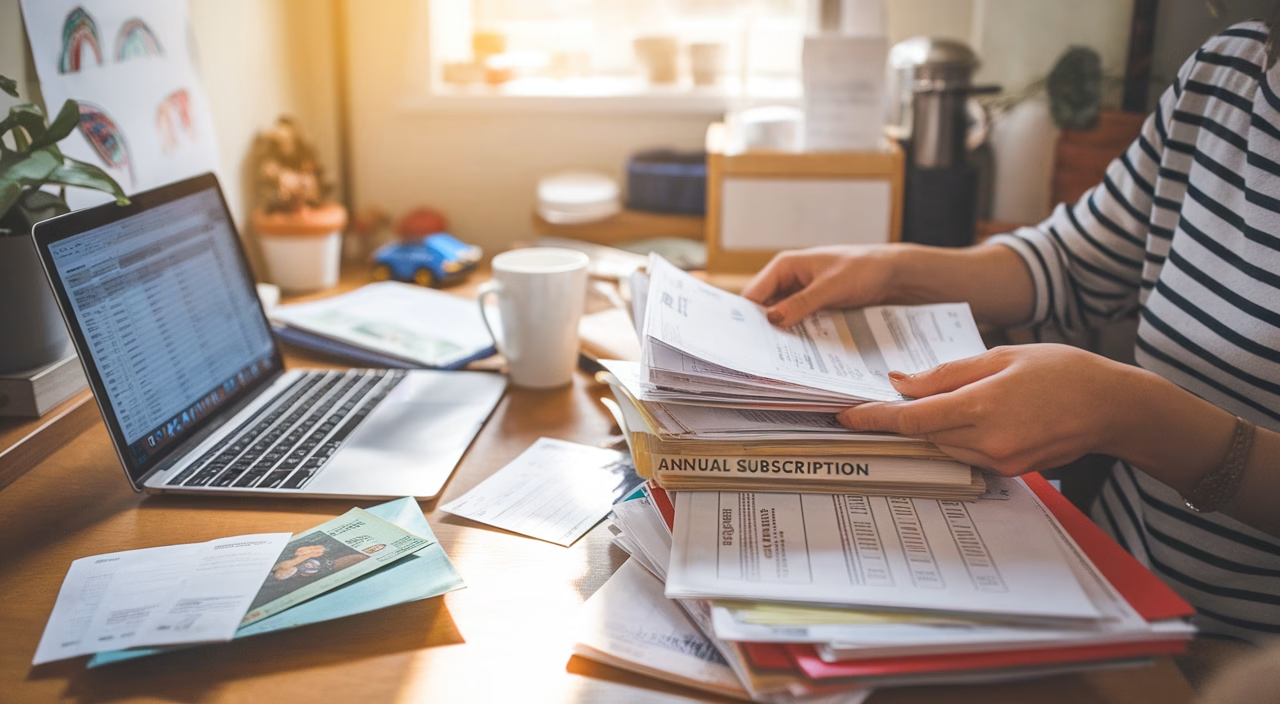
Atypical expenses are those costs that don’t occur each month but still happen predictably over the course of a year. Think of property taxes, holiday gifts, annual insurance premiums, and home maintenance. They’re like potholes on an otherwise smooth financial road—hit one unexpectedly when you underestimate expenses, and your carefully planned budget can veer off course. In practice, I often see clients ignore dental work, appliance repairs, or even big-ticket family events when estimating their annual spending.
To manage these atypical expenses effectively, track your spending for a full year and look for seasonal or one-off payments. Add them to your cash flow calculation, divided across twelve months. This forced transparency prevents the shock of ‘unexpected’ costs and gives you the runway you need to keep your investment plans intact while avoiding the common trap of underestimating expenses.
The Role of Lack of Understanding Expenses
Many people struggle with a lack of understanding expenses because our financial lives are more complex than they’ve ever been. Digital subscriptions, fluctuating utility bills, shared expenses, and forgotten memberships all add noise to your spending picture. Some let financial statements pile up, while others avoid tracking spending out of fear or overwhelm. It’s all too easy to significantly underestimate expenses when the full picture remains blurred by this complexity.
By clearly listing out all recurring, essential, and discretionary expenses, you build a realistic portrait of your money outflows. Tools and apps can help, but nothing beats an honest self-audit. Remember, the goal isn’t austerity—it’s clarity. Only by understanding where your money actually goes can you confidently direct the rest to investments and savings without falling into the trap that causes most investors to underestimate expenses.
Practical Tips for Effective Expense Management
Consistently managing expenses is at the core of financial stability and preventing the common tendency to underestimate expenses. You need more than just a list of bills—you need to know how to anticipate, track, and adapt to new spending realities, especially when dealing with rising costs and atypical expenses.
Budgeting Strategies for Success
Think of your budget as the control center that prevents you from falling into the trap where most investors underestimate expenses. The goal isn’t to deny yourself, but to assign every dollar a purpose, including fun money and savings. Start by tracking all fixed and variable expenses for at least three months—don’t forget the automatic payments that can slip under the radar and contribute to expense underestimation. Then, create budget buckets: housing, food, transportation, leisure, and ‘everything else.’
If you’ve historically been among those who underestimate expenses, try using the “pay yourself first” model: allocate money to savings and investments as soon as you get paid, then use what’s left for day-to-day spending. This protects your goals from being bumped down the priority list by temptations and lifestyle inflation that contribute to rising costs over time.
| Category | Recommended % |
|---|---|
| Housing | 25-35% |
| Food & Groceries | 10-15% |
| Transport | 10-15% |
| Savings/Investments | 15-20% |
| Leisure & Other | 10-20% |
Make reviewing your budget a monthly ritual—adapt as prices change and rising costs impact your spending. Remember, it’s not about perfection. It’s about progress and the honest assessment needed to avoid underestimating expenses.
Building an Emergency Fund
An emergency fund is your financial shock absorber—the unsung hero when atypical expenses or crises hit, especially crucial for those who tend to underestimate expenses. Too often, clients imagine emergencies are rare, only to be blind-sided by a medical bill or urgent home repair that wasn’t factored into their spending projections. Aim to set aside three to six months’ worth of living expenses in a high-access savings account.
The beauty of this approach is twofold. First, you insulate your investment plan from forced withdrawals or credit card debt when you face those costs you didn’t anticipate. Second, you gain peace of mind, freeing you to optimize your investments instead of firefighting financial surprises that result from underestimating expenses.
If you’re not sure where to start, begin small—a few hundred dollars can still cushion everyday bumps like car repairs or optometrist visits. Consistency is more valuable than perfection here. Set up an automatic transfer on payday, and watch your ‘rainy day’ fund grow to protect against the tendency to underestimate expenses.
The Psychological Factors Behind Expense Underestimation
Have you ever sworn you only spent a certain amount eating out, only to be shocked at the month-end total? There’s a reason why so many people underestimate expenses—and it runs deeper than bad memory.
Behavioral Economics Insights
Behavioral economics teaches us that our brains are wired with cognitive shortcuts—or biases—that often cause us to underestimate expenses. Confirmation bias pushes us to notice only the spending that matches our expectations. Optimism bias convinces us emergencies are rare and that ‘next month will be different.’ Anchoring makes last month’s spending feel like a reasonable guide—even when this month brings unique atypical expenses that weren’t previously considered.
To combat the psychological tendency to underestimate expenses, you need ‘guardrails’ for your finances. Regular reviews, spending alerts, and even accountability partners (like a financial advisor or trusted friend) make it harder for these biases to run unchecked. The more honest and specific your tracking, the less influence these psychological traps have on your decision-making and expense estimation accuracy.
Overcoming Cognitive Biases
Cognitive biases aren’t flaws—they’re part of being human. But left unchallenged, they can derail budgets and investment plans by causing you to consistently underestimate expenses. One common bias I see is the tendency to round down costs—if your grocery bill is $183.47, your brain might round that to $150 in your mental tally. Over the weeks, this adds up to a major gap between perceived and actual spending.
One strategy to counteract mental accounting errors that lead to underestimating expenses: automate spending analysis with bank alerts and budgeting apps, so your real spending habits are front and center. Another is to ‘budget for bias’—always estimate slightly above your typical spend, providing a buffer for honest mistakes and the natural human tendency to underestimate expenses.
Understanding the Automatic Payments Impact
Automatic payments can be both a blessing and a curse, significantly contributing to why people underestimate expenses. On the plus side, they help you avoid late fees, build your credit score, and automate savings. But the downside? The automatic payments impact on your budget awareness can be substantial—they mask spending, making it far easier to underestimate expenses and let forgotten subscriptions drain your bank account month after month.
In my experience, reviewing all recurring payments twice a year is key to understanding the full automatic payments impact on your budget. List every automatic debit—streaming, cloud storage, insurance, memberships—and ask, ‘Do I really need this?’ Cancel, pause or renegotiate everything that doesn’t bring you true value. Remember, even small monthly charges add up to a sizable amount over the course of a year—money that would be working harder for you in an investment account rather than contributing to underestimated expenses.
Cost Guide: Typical Expense Ranges
| Expense Category | Low-End Monthly | Mid-Range Monthly | High-End Monthly |
|---|---|---|---|
| Housing | $700 | $1,500 | $3,000+ |
| Utilities | $100 | $250 | $500 |
| Groceries | $200 | $500 | $900 |
| Transportation | $100 | $350 | $700 |
| Discretionary | $50 | $300 | $800 |
Understanding the Impact of Rising Costs on Your Finances
Rising costs don’t just nibble at your budget—they can swallow major chunks if left unchecked, making it even easier to underestimate expenses over time. Whether it’s inflation, changes in insurance premiums, or spikes in utility costs, these rising costs erode your purchasing power and can force painful spending cuts. Many working adults are surprised to discover their expenses have crept up significantly, sometimes outpacing salary growth or investment returns.
The solution is to build annual reviews into your financial routine that specifically account for rising costs and their impact on your budget projections. Adjust your budget and investment plan to reflect changes in cost of living, and always factor in potential increases when planning ahead. Remember, a proactive approach is better than scrambling to respond after your cash flow is strained by costs you failed to anticipate. This discipline keeps your long-term goals—like retirement or a child’s education—on track despite ever-changing financial landscapes and the natural tendency to underestimate expenses.
Effective Strategies for Budgeting and Saving Money
So, how can you make managing and forecasting expenses a habit that prevents you from joining the ranks of those who underestimate expenses? Here are tried-and-true tactics pulled from years of advising clients across all life stages:
- Use the “Three-Account System”: One for fixed bills, one for fun/discretionary, and one for savings/investments. This physically separates your dollars and prevents accidental overspending while improving expense tracking accuracy.
- Set recurring calendar reminders to review bank and credit statements every quarter, specifically looking for automatic payments impact and atypical expenses you might have forgotten.
- Round up your expense estimates by 10-15% to build a buffer that accounts for the natural tendency to underestimate expenses.
- When you get a raise or bonus, allocate the first portion to boost your emergency fund or investments, not to inflate your lifestyle and contribute to rising costs.
- Involve your household: Share your budget process with loved ones so everyone understands the plan and helps prevent the lack of understanding expenses that can derail financial goals.
Consistency—not intensity—wins the budgeting game and helps you avoid underestimating expenses. Building these small routines is what keeps your financial plan resilient, even when life throws curveballs in the form of atypical expenses or rising costs.
Final Thoughts
Navigating expenses isn’t about pinching every penny or obsessing over every spreadsheet cell—it’s about avoiding the common trap where most investors underestimate expenses. The key is building awareness of where your money flows, how human nature can trip us up through psychological biases, and how to plan for both the expected costs and atypical expenses. The more honest you are about your true spending patterns, including the automatic payments impact and rising costs over time, the more freedom you gain: to invest confidently, to weather financial storms, and to shape the future you truly want. Make expense tracking and review a lifelong habit, and your investments will always have a strong foundation to grow from, protected from the financial surprises that catch so many investors off guard.
Frequently Asked Questions
- What is one of the most common mistakes investors make while choosing their investments?
- Overlooking expenses is one of the biggest mistakes—either by not accounting for atypical costs, underestimating the impact of automatic payments, or not adjusting for rising costs. All these can undermine your returns and put unnecessary stress on your investments.
- How can I avoid underestimating my expenses?
- Track spending for several months, list all recurring and irregular expenses, and build a buffer into your budget. Review your automatic payments and update your spending plan to reflect both predictable and variable costs.
- Why do automatic payments make it harder to manage expenses?
- Because they happen in the background, automatic payments can go unnoticed for months. People often forget about subscriptions they no longer use or don’t update their budget to reflect new charges, leading to surprises at month-end.
- What are atypical expenses and why do they matter?
- Atypical expenses are costs that don’t happen every month—like car maintenance, annual memberships, or holiday spending—but can make a big difference if unplanned for. Including these in your budget protects against cash flow gaps and unnecessary debt.
- How do rising costs impact my long-term financial plan?
- Rising costs—due to inflation or changes in lifestyle—can erode the value of your money over time. Failing to account for them means your savings and investments may not go as far as you expect, delaying your goals or forcing spending cuts.
- What’s the best way to build an emergency fund for unexpected expenses?
- Aim for three to six months of living expenses, but start with what you can. Automate savings transfers and treat your fund as non-negotiable. Review and adjust as life changes (new job, children, home purchase, etc.).
- How often should I review my budget?
- Ideally, review your budget monthly and make a more comprehensive review quarterly or annually. This helps you catch new expenses, rising costs, and change habits before they impact your larger financial picture.

