

Why do investors sell at the worst times?
Investors sell at the worst times because emotional reactions override logical thinking during market volatility. Fear drives panic selling during market selloffs while overconfidence leads to poor timing during market peaks. Without emotional discipline and a solid investment strategy, these psychological traps consistently destroy long-term wealth.
TL;DR
- Investors sell at the worst times due to emotional reactions—panic during market selloffs and overconfidence during peaks create devastating timing mistakes.
- Panic selling locks in losses and causes investors to miss recovery rebounds that follow market selloffs.
- Avoiding poor investment choices requires understanding behavioral biases and developing a solid investment strategy with clear rules.
- Recovery from poor investment choices is possible through disciplined analysis, gradual re-entry, and commitment to emotional discipline.
- Investment discipline beats market timing for consistent long-term wealth building success.
Understanding Why Investors Sell at the Worst Times
As a financial advisor, I’ve witnessed countless investors fall into the same destructive pattern: they sell at the worst times when fear peaks and buy when optimism soars. This isn’t a character flaw—it’s human nature working against investment success. When investors sell at the worst times, they’re responding to hardwired survival instincts that served our ancestors well but devastate modern portfolios.
Think of investing like navigating a storm at sea. Calm markets feel easy, but when volatility strikes during a market selloff, many investors abandon ship precisely when staying the course matters most. This panic selling behavior explains why investors consistently underperform the very investments they own—they sell low in fear and often buy high from missing out.
The pattern repeats because we interpret market movements through emotional filters rather than rational analysis. Fear amplifies during selloffs while greed grows during rallies. Only by recognizing these psychological drivers can we break the cycle of poor investment choices and build lasting wealth.
The Psychology Behind Panic Selling During Market Selloffs
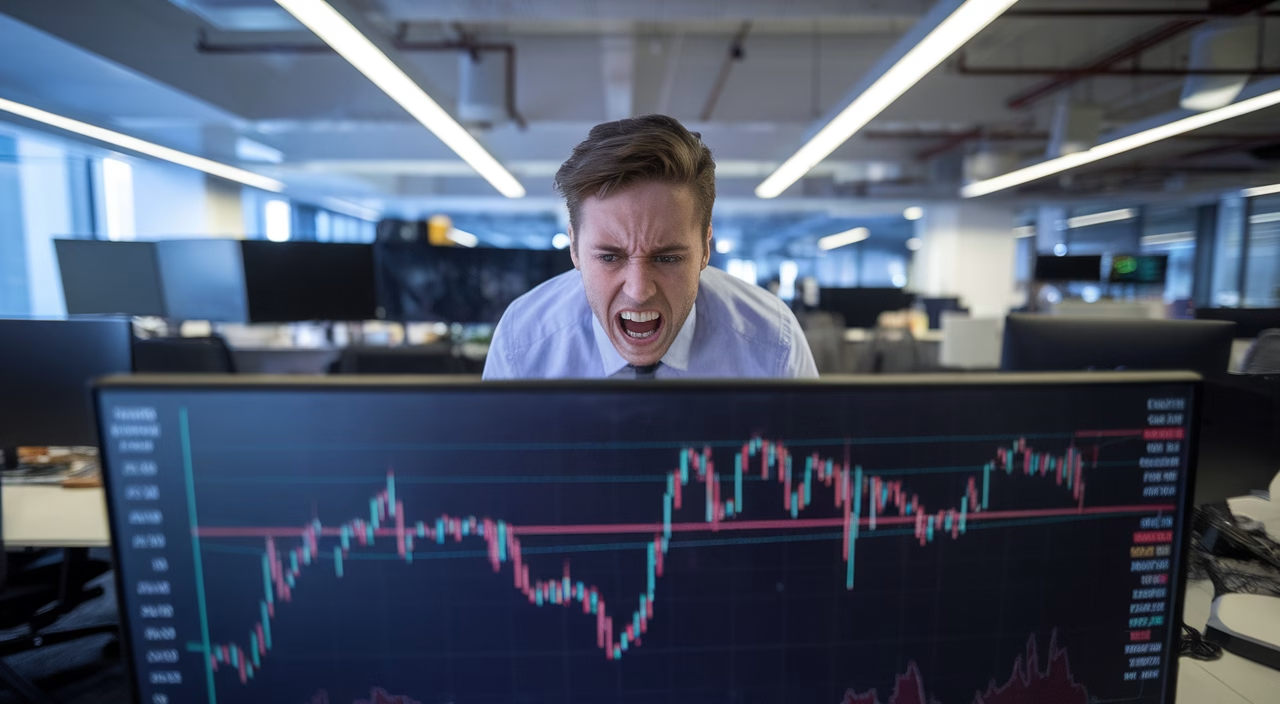
Picture watching your portfolio plummet during a severe market selloff. Headlines scream about economic collapse while your gut screams louder: “Sell everything before you lose more!” This panic selling response stems from loss aversion—we feel financial pain twice as intensely as equivalent gains bring pleasure.
When investors sell at the worst times during market selloffs, they’re surrendering to evolutionary programming. Our brains evolved for immediate physical threats, not long-term wealth building. The fight-or-flight response that saved our ancestors becomes our enemy during temporary market downturns. Panic selling transforms paper losses into permanent ones, forcing investors to miss the rebounds that typically follow selloffs.
Consider major market selloffs throughout history: mass selling always peaks near market bottoms. Investors who panic sell lock in losses right before recoveries begin. Those who resist panic selling and maintain their solid investment strategy often see their patience rewarded as markets recover and reach new highs.
Overcoming Overconfident Investing That Leads to Poor Choices
Overconfident investing creates the opposite problem but equally poor investment choices. During bull markets, success breeds dangerous confidence. Investors attribute gains to skill rather than favorable conditions, leading to excessive risks and concentrated positions. This overconfidence sets the stage for devastating losses when markets inevitably turn.
I’ve counseled numerous clients who rode winning streaks confidently, only to suffer severe losses when overconfident investing met market reality. They abandoned diversification, ignored warning signs, and dismissed basic risk management. When the market selloff arrived, their overconfident positions amplified losses far beyond what a solid investment strategy would have allowed.
Avoiding overconfident investing requires constant humility and skepticism, especially during good times. No strategy, stock, or asset class rises forever. Regular stress-testing of assumptions and seeking outside perspectives helps maintain the emotional discipline necessary for long-term success.
Proven Strategies for How to Avoid Panic Selling in Investments
Breaking the cycle where investors sell at the worst times requires a systematic approach built on preparation and discipline. Here’s how to avoid panic selling in investments through proven strategies:
- Create a written investment plan: Document your goals, risk tolerance, and time horizon before volatility strikes. This roadmap prevents emotional detours during market selloffs.
- Automate investment processes: Set up automatic contributions and rebalancing to remove emotion from routine decisions and maintain your solid investment strategy.
- Limit portfolio monitoring: Schedule specific times for portfolio reviews rather than checking constantly during volatile periods.
- Study market history: Understanding that all previous market selloffs have been followed by recoveries builds confidence to resist panic selling.
- Prepare for volatility mentally: Accept that temporary losses are inevitable parts of long-term wealth building, not emergencies requiring immediate action.
- Focus on long-term goals: When panic selling urges arise, remind yourself why you’re investing and how current volatility fits your timeline.
These strategies transform emotional reactions into disciplined responses, helping you avoid joining the masses who sell at the worst times during every market cycle.
Critical Mistakes to Avoid During Market Selloffs
During market selloffs, adrenaline surges and news coverage intensifies pressure to act. Here are the most dangerous mistakes that cause investors to sell at the worst times:
- Obsessive portfolio monitoring: Constant checking amplifies fear and triggers poor investment choices. Stick to scheduled review periods.
- Attempting to time market bottoms: Nobody can reliably predict when selloffs end. Panic selling usually occurs near lows, causing investors to miss rebounds.
- Abandoning your solid investment strategy: Temporary market stress doesn’t invalidate long-term plans. Stick to predetermined rules rather than reacting to noise.
- Ignoring asset allocation principles: One asset’s poor performance doesn’t mean your entire strategy is wrong. Diversification requires patience through cycles.
- Forgetting previous market lessons: Every selloff feels unique, but recovery patterns remain remarkably consistent throughout investment history.
During market selloffs, doing nothing often requires more courage than taking action. The discipline to maintain your course while others panic sell creates long-term competitive advantages.
Cost Guide: The Price of Poor Investment Timing
Understanding the financial impact of emotional decision-making reveals why investors who sell at the worst times struggle to build wealth. Here’s how poor investment timing compares with disciplined approaches:
| Approach | Low-End Cost (Potential Loss) | Mid-Range Cost | High-End Cost |
|---|---|---|---|
| Panic Selling During Selloff | Loss of 5%–10% of portfolio | Loss of 15%–25% | Loss of 30%+ (if missing rebound) |
| Sticking to Investment Plan | Temporary paper losses | Recovery to previous levels | Potential for gain during rebound |
| Overconfident Investing | Missed diversification gains | Losses on concentrated bets | Severe drawdowns if strategy fails |
These costs compound over time. Investors who sell at the worst times often need years to recover, while those following a solid investment strategy typically see their patience rewarded with superior long-term returns.
Recovering from Poor Investment Choices
If you’ve already fallen into the trap where investors sell at the worst times, recovery is possible. Every successful investor has made poor investment choices—what matters is learning from mistakes and improving your approach.
- Analyze without self-judgment: Identify what triggered your poor investment choices. Was it fear during a market selloff or overconfident investing during a rally?
- Rebuild your solid investment strategy: Apply lessons learned to create better rules. If panic selling was the problem, establish waiting periods before making changes during volatile markets.
- Re-enter markets systematically: If you panic sold and missed recovery, use dollar-cost averaging to gradually rebuild positions rather than trying to time a perfect entry.
- Seek guidance and accountability: Working with advisors or investment groups provides emotional support and objective perspectives during future challenges.
- Maintain long-term focus: Even significant mistakes cost less when you resume disciplined investing quickly rather than staying on the sidelines.
Recovery from poor investment choices often leads to stronger investment discipline. Many clients who’ve experienced the pain of selling at the worst times become the most committed to avoiding future emotional mistakes.
Final Thoughts: Building Resilience to Avoid Selling at the Worst Times
Investment history shows that even brilliant minds can be undone by emotional reactions that cause them to sell at the worst times. If you’ve made these mistakes, you’re in good company—and you’re not destined to repeat them. Success comes from building emotional resilience through experience, maintaining a solid investment strategy, and learning from each market cycle.
Frequently Asked Questions
- Why do investors panic sell?
Panic selling happens when fear overwhelms rational analysis during market downturns, leading investors to liquidate investments at the worst possible moments. - How can I avoid selling at the worst times?
Develop a written investment plan, automate contributions and rebalancing, and limit portfolio checks to reduce emotional reactions to market moves. - What are common mistakes during a market selloff?
Checking portfolios obsessively, trying to time entry and exit, and selling in response to fear rather than by plan are major missteps to avoid. - What should I do if I have already sold in a panic?
Reflect on the decision, plan your re-entry, and restart investing gradually to avoid another emotional pitfall. - How does overconfidence impact my investing?
It often leads to excessive risk-taking, neglect of diversification, and a higher likelihood of significant losses during downturns. - Does it make sense to “wait for the market to settle” before investing again?
Trying to time the market recovery is almost always futile; consider systematic re-investment instead to avoid missing rebounds. - Can professional advice help me avoid panic selling?
Yes, working with a trusted advisor can provide emotional support, objective guidance, and disciplined decision-making frameworks.

