

What is Overconfidence Bias in Trading, and Why Should You Care?
Overconfidence bias is the tendency to place too much faith in your own knowledge, intuition, or predictions—especially in high-stakes environments like the markets. For traders, this cognitive bias can quietly drive them to take excessive risks, ignore contrary evidence, or overlook critical details. The result? Damaged portfolios, missed opportunities, and lessons learned the hard way.
TL;DR Summary
- Overconfidence bias leads traders to overestimate their skill and the accuracy of their predictions.
- It’s a cognitive bias rooted in our psychology—especially when we feel certain or successful.
- The bias negatively impacts investment returns by increasing risk exposure and poor decision-making.
- Recognizing and managing this bias is essential to long-term trading success.
- Practical solutions include journaling trades, using checklists, and seeking feedback or automation.
Understanding Overconfidence Bias
At its core, overconfidence bias is a psychological illusion that affects even the most experienced traders. It’s the internal voice that whispers, “I’ve got this figured out,” even when evidence suggests otherwise. This cognitive bias doesn’t discriminate—research shows that professional investors and portfolio managers are just as susceptible as retail traders.
In trading, confidence is often confused with competence. This stems from the Dunning-Kruger Effect: the less we know, the more confident we feel about our abilities. When our trades succeed, we attribute that success exclusively to our skill rather than acknowledging the role of research, timing, and luck.
Here’s a common scenario: A trader profits early on, starts ignoring warning signals in future trades, and begins leveraging larger positions. Soon enough, a single catastrophic loss wipes away months of gains. This pattern demonstrates overconfidence bias in its most destructive form.
What Causes Overconfidence Bias?

Several psychological and situational factors contribute to this dangerous cognitive bias:
- Recent successes: A winning streak can inflate your ego and blindside your natural caution.
- Information illusion: Access to more data doesn’t always equal better decision-making—it can create a false sense of certainty.
- Selective memory: We tend to remember our wins vividly while rationalizing or forgetting our losses.
- Lack of feedback: Unlike other professions, traders rarely receive immediate, structured feedback from peers or mentors.
Effects on Investment Returns
If you’re wondering whether overconfidence bias really impacts your bottom line, the research is clear—it can devastate your investment returns. When traders overestimate their abilities, they’re more likely to:
- Trade too frequently, dramatically increasing transaction fees and taxes.
- Avoid stop-loss strategies, believing a failing trade will “turn around.”
- Concentrate capital in fewer assets, dismissing the importance of risk diversification.
This mismatch between perceived skill and actual performance consistently leads to lower investment returns. Studies reveal that the most active traders—those trading out of overconfidence—earn significantly less than their more cautious counterparts.
Case Studies and Examples
Consider this real-world scenario: A retail trader rides a tech boom, tripling their portfolio in six months. Emboldened by this success, they increase position sizes and move into complex options strategies, believing they’re “on a roll.” But when market volatility strikes, their positions sour quickly. Without proper stop losses or hedging strategies, the drawdown is severe. The culprit wasn’t market conditions—it was overconfidence bias masquerading as skill.
Even institutional investors fall victim to this cognitive bias. Entire hedge funds have collapsed because managers placed oversized bets based on conviction rather than repeatable analysis. One notorious fund leveraged up during a short-squeeze rally, assuming their read on market sentiment was superior. They lost hundreds of millions within days.
Overcoming Overconfidence Bias
Successful trading requires mastering both market analysis and self-awareness. Here’s how you can combat overconfidence bias and build more disciplined trading strategies:
- Track your predictions: Maintain a detailed trade journal documenting your reasoning, entry points, and exit strategies. Regular review reveals hidden biases.
- Use objective checklists: Before entering any trade, work through a comprehensive decision-making checklist to reduce emotional influence.
- Automate critical decisions: Use automated orders like stop losses and take-profits to remove emotional interference after trade execution.
- Seek external perspectives: Join trading communities or work with mentors who can provide honest feedback about your blind spots.
- Implement strict position sizing: Base your trade sizes on volatility and risk tolerance rather than confidence levels.
Practical Strategies for Traders
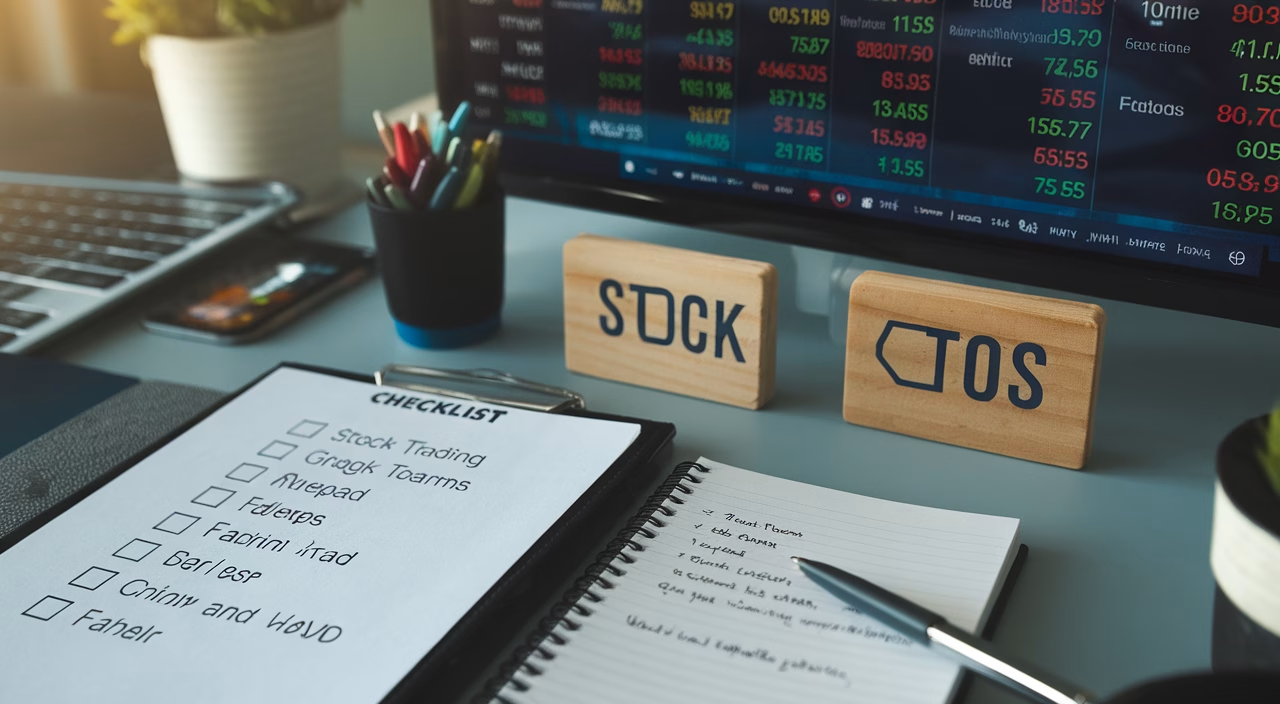
Think of your trading setup like a professional pilot’s cockpit. Every tool, checklist, and constraint exists to prevent human error. Build your trading environment intentionally:
- Create and strictly follow a written trading plan that outlines your strategy and risk parameters.
- Set maximum allowable daily drawdown percentages to limit damage from overconfident decisions.
- Reassess any planned trades after experiencing big wins or losses, when emotions run highest.
- Use probabilistic thinking—consider the full range of possible outcomes, not just your preferred scenario.
You’ll notice something powerful as you become more systematic: the more structured your approach, the more genuinely confident you feel—and the fewer costly mistakes you make. Trading transforms from an adrenaline-driven activity into a disciplined pursuit of edge and consistency.
Cost Guide: Emotional Biases in Trading
| Bias Type | Potential Cost | Example |
|---|---|---|
| Overconfidence Bias | Losses due to oversized trades or lack of diversification | Triple-sized options trade after winning streak |
| Confirmation Bias | Missed warnings, overexposure | Ignoring earnings miss headlines you didn’t want to see |
| Loss Aversion | Holding a losing trade too long | Riding a stock from sixty dollars down to twenty dollars, hoping it recovers |
Final Thoughts
The markets are ruthless teachers, and overconfidence bias can deliver some of the most expensive lessons you’ll ever encounter. But once you recognize this psychological trap, it becomes entirely manageable. By building robust systems that protect you from your own biases—through detailed journaling, objective checklists, external feedback, and maintaining humility—you’ll not only trade more effectively, you’ll develop sharper decision-making skills.
Remember, the most successful traders aren’t those who believe they always know what’s coming next. They’re the ones who prepare systematically for uncertainty and act with disciplined restraint. That’s the real competitive advantage in today’s complex markets.
Frequently Asked Questions
- What is overconfidence bias in trading?
It’s a cognitive bias where traders overestimate their ability, leading to risky behaviors and poor outcomes. - How does overconfidence affect investment decisions?
It can prompt traders to ignore risks, overtrade, and react emotionally instead of logically. - Can overconfidence bias be completely eliminated?
No, but it can be managed using tools like journaling, automation, and feedback from others. - Does experience reduce overconfidence?
Sometimes, but not always. In fact, success can increase confidence even among experts. - What’s the difference between confidence and overconfidence?
Confidence is grounded in preparation and data; overconfidence ignores risks and assumes success. - Are there benefits to confidence in trading?
Yes. Reasonable confidence is vital, but it must be tempered with realism and preparation. - How can a beginner avoid overconfidence?
By starting small, tracking decisions, reviewing outcomes, and setting strict trade criteria.
{“@context”:”https://schema.org”,”@type”:”BlogPosting”,”headline”:”Avoiding Overconfidence Bias in Trading”,”description”:”Overconfidence bias can derail your trading. Learn how to identify, understand, and overcome it with expert-backed strategies.”,”datePublished”:”2025-09-21T04:41:12.000Z”,”publisher”:{“@type”:”Organization”,”name”:”Pajamas Trader”,”logo”:{“@type”:”ImageObject”,”url”:”https://pajamastrader.com/wp-content/uploads/pajamas-trader-1.jpg”}},”mainEntityOfPage”:{“@type”:”WebPage”,”@id”:”https://pajamastrader.com/”},”keywords”:[“overconfidence bias”,”cognitive bias”,”investment returns”,”decision-making”,”psychology of trading”,”overcoming overconfidence bias”],”mainEntity”:[{“@type”:”Question”,”name”:”What is overconfidence bias in trading?”,”acceptedAnswer”:{“@type”:”Answer”,”text”:”It’s a cognitive bias where traders overestimate their ability, leading to risky behaviors and poor outcomes.”}},{“@type”:”Question”,”name”:”How does overconfidence affect investment decisions?”,”acceptedAnswer”:{“@type”:”Answer”,”text”:”It can prompt traders to ignore risks, overtrade, and react emotionally instead of logically.”}},{“@type”:”Question”,”name”:”Can overconfidence bias be completely eliminated?”,”acceptedAnswer”:{“@type”:”Answer”,”text”:”No, but it can be managed using tools like journaling, automation, and feedback from others.”}}]}

