

What Happens When You Ignore Macroeconomic Trends in Government Policy?
When government policy overlooks macroeconomic trends, the results often ripple through the entire economy—like the first domino tipping a precarious row. What happens when you ignore macroeconomic trends becomes painfully clear: ignoring key indicators like GDP, inflation, and employment rates leads to ill-timed decisions, inefficient resource allocation, and even unintended crises across industries. In practice, decisions detached from economic realities stifle economic growth, strain social systems, and ultimately degrade public trust in government.
TL;DR: Essential Takeaways on Macroeconomic Trends in Public Policy
- Macroeconomic trends are crucial for informed government decision-making and sustainable economic growth.
- Ignoring GDP and similar indicators often leads to catastrophic long-term impacts in public policy, including misallocation of resources and delayed crisis responses.
- Historical and current real-world examples reveal the severe consequences of disregarding GDP and economic trends across sectors.
- Inclusive, data-driven policy design leverages macroeconomic indicators to boost national resilience and growth.
- Proactive policy based on economic insights dramatically outperforms reactive, ad-hoc government decisions.
- Best practices for public officials involve incorporating thorough macroeconomic analysis into every major decision.
The Critical Importance of Macroeconomic Trends in Government Decision-Making
The world of public policy is complex, often shaped by competing interests, political priorities, and time-sensitive choices. Yet, at the heart of impactful policy lies one essential element: a keen understanding of macroeconomic trends. When you ignore macroeconomic trends, you’re essentially flying blind through economic turbulence. Data like GDP growth rates, inflation, unemployment, and trade balances act as the dashboard for national health, guiding policy like a seasoned pilot uses instruments to navigate turbulent skies.
Why give these indicators such weight? Macroeconomic trends synthesize the experience of millions of individuals and businesses, offering a clear, unbiased signal of where the economy stands and where it’s headed. If policy leaders pay attention to these trends, they can steer away from hazards—like overheating markets or mounting unemployment—before a crisis fully emerges. What happens when you ignore macroeconomic trends is akin to flying blind—a risky and often devastating strategy.
Prudent government decision-making depends not just on recognizing macroeconomic trends, but on interpreting them in the context of both history and the current global landscape. Small changes in monetary or fiscal policy, when informed by macroeconomic realities, can spark lasting positive change. Conversely, ignoring GDP and other key indicators creates more problems than it solves, impacting everything from job markets to income inequality and national security.
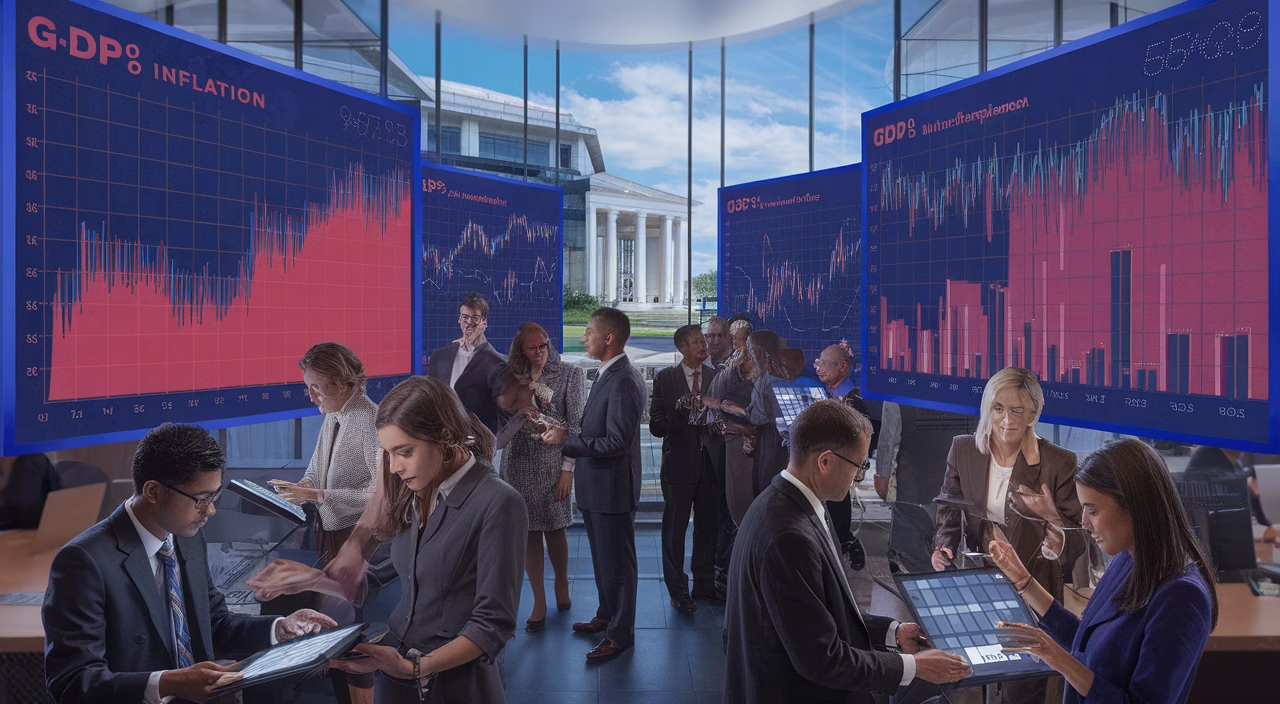
Understanding the Critical Role of GDP in Policy Success
GDP, or Gross Domestic Product, is often described as the backbone of macroeconomic analysis—and for good reason. It encapsulates the value of all goods and services produced in an economy, offering a big-picture, quantitative summary of economic performance. But why should you, as a citizen or policymaker, truly care about GDP and the consequences of ignoring it?
Imagine GDP as a nation’s financial report card. Rising GDP typically signals increased business activity, job creation, and higher standards of living. Falling or stagnant GDP, on the other hand, often signals economic distress, demanding immediate policy intervention. Policymakers can use GDP growth, contraction, or volatility as early warning systems—guiding adjustments to spending, taxation, and even trade relations. Ignoring GDP means missing these critical signals entirely.
However, GDP is not a magic bullet or a standalone solution. It must be used alongside other macroeconomic indicators and qualitative factors. For example, strong GDP growth without corresponding progress in income equality or environmental health can mask deeper, systemic issues. Effective public policy interprets GDP as one crucial chapter in a broader economic narrative—but what happens when you ignore macroeconomic trends entirely is that you lose this vital perspective.
Consider the international context: countries with similar resources often diverge sharply over decades due in part to how consistently their governments monitor and respond to GDP signals. The consequences of disregarding GDP include missing early signs of potential trouble or recovery, delaying corrective action and multiplying costs exponentially down the line.
Devastating Consequences of Ignoring Macroeconomic Trends
Here’s what often happens when policymakers operate with tunnel vision or disregard the broader economic context: sector-specific solutions may solve short-term problems but sow the seeds of long-term instability. What happens when you ignore macroeconomic trends becomes evident through several serious consequences of disregarding GDP and other key indicators:
- Massive Resource Waste: Investments in industries burdened by falling demand lead to higher unemployment and catastrophic spending inefficiencies.
- Delayed Crisis Response: Economic shocks hit harder and last longer when governments fail to anticipate them using macroeconomic trends and GDP data.
- Collapsed Public Trust: When citizens see ineffective or contradictory government decisions, trust and civic engagement plummet dramatically.
- Regulatory Disasters: Overly tight or loose monetary and fiscal policies imposed without economic context devastate banks, businesses, and households alike.
- Exploding Inequality: Poorly targeted spending exacerbates income inequality, disrupts employment, and reduces access to essential services when macroeconomic trends are ignored.
Looking across history, we observe instances where governments that ignored macroeconomic warnings faced not only financial catastrophe but also broad social unrest and diminished international credibility. The lesson is clear: public policy impact is amplified—positively or negatively—by how well decision-makers read and react to these critical macroeconomic trends.
Real-World Examples of GDP Impact and Economic Devastation
It’s one thing to discuss macroeconomic theory; it’s another to witness its profound effects play out across real societies and industries. Let’s examine select examples, demonstrating what happens when you ignore macroeconomic trends and the severe consequences of disregarding GDP in public policy.
- The Aftermath of Ignored Recessions: Multiple governments dismissed early warnings in GDP shrinkage, only to face prolonged depressions, massive layoffs, and social turmoil. Delayed fiscal stimulus meant that job losses compounded and recovery slowed considerably, demonstrating the devastating consequences of ignoring GDP.
- Entire Sectors Abandoned: When sectoral growth decelerated but officials stuck to rigid industrial policies while ignoring macroeconomic trends, entire regions suffered. Such missteps resulted in ghost towns, lost skills, and cascading effects on related industries.
- Housing Market Collapses: Rapid GDP growth coupled with unchecked housing sectors led to asset bubbles. What happens when you ignore macroeconomic trends became clear when these bubbles burst, producing sharp market corrections and eroding household wealth.
Conversely, there are spectacular examples of countries that used timely GDP analysis and macroeconomic trends to implement reforms: revising taxation, adjusting labor market policies, and investing in future-ready sectors. These governments often emerged stronger from global downturns, preserved vital jobs, and fostered competitive, innovative industries by avoiding the consequences of disregarding GDP.
| Scenario | Policy Approach | Outcome |
|---|---|---|
| Ignoring GDP Decline | Maintain status quo | Deep recession, high unemployment |
| Proactive GDP Monitoring | Early stimulus, targeted reform | Rapid recovery, sustained growth |

How to Harness Macroeconomic Data for Effective Public Policy
So, how do policymakers reliably integrate macroeconomic trends into their decisions and avoid the devastating consequences of ignoring GDP? Let’s break down a practical approach that prevents what happens when you ignore macroeconomic trends:
- Continuous Data Monitoring: Establish routine review systems for key indicators like GDP, inflation, and employment across all ministries to track macroeconomic trends consistently.
- Cross-Sector Analysis: Encourage collaboration between economic and social departments to interpret the implications of macroeconomic trends on health, education, and infrastructure.
- Advanced Scenario Planning: Use macroeconomic projections and GDP forecasts to run comprehensive “what-if” models for major decisions—stress-testing proposals against possible downturns or booms.
- Transparent Public Communication: Share relevant economic analyses in accessible formats to improve civic understanding and build trust around macroeconomic trends.
- Expert Economic Consultation: Involve economists to challenge assumptions and strengthen evidence-based policy design, preventing the consequences of disregarding GDP.
Adopting these practices not only minimizes the risk of experiencing what happens when you ignore macroeconomic trends but positions governments to maximize public policy impact, stabilize markets before shocks occur, and lead innovative social change. Policymaking grounded in solid macroeconomic evidence is more resilient, more adaptable, and ultimately more successful over the long term.
Cost Guide: Economic Growth Decision Tools
| Level | Tool/Resource | Typical Cost Range (USD) |
|---|---|---|
| Low-End | Basic GDP Dashboards | $0 – $2,000 |
| Mid-Range | Integrated Data Platforms | $2,000 – $10,000 |
| High-End | Custom Analytics & Consultation | $10,000 – $100,000+ |
Conclusion: Preventing Policy Disasters Through Economic Intelligence
What happens when you ignore macroeconomic trends is simply a risk that modern governments cannot afford. The dashboard of economic indicators provides more than just numbers; it’s an early warning system, a strategic planning tool, and a compass through turbulent policy waters. The history of economic growth—and the sometimes catastrophic consequences of disregarding GDP—teaches us that the benefits of considering macroeconomic trends are not just abstract concepts but vital necessities.
In an era where global shocks cascade at lightning speed, resilient, informed government policy becomes our best defense against economic devastation. Policymakers who cultivate a habit of deep economic analysis unlock better choices, fairer resource allocation, and stronger societal outcomes. If you’re invested in the future of public policy and government decision-making, make macroeconomic awareness your starting point for real, lasting change—and your shield against the devastating consequences of ignoring these critical trends.
Frequently Asked Questions
-
Why is GDP so important for policy decisions?
GDP offers a comprehensive measure of economic activity, enabling policymakers to gauge the health of the economy and craft timely interventions. -
What are some consequences of ignoring GDP in public policy?
Disregarding GDP can lead to delayed crises, wasted resources, weakened industries, and eroded public trust in government actions. -
How can governments best monitor macroeconomic trends?
By investing in regular data reviews, scenario analysis, expert consultation, and transparent communication of economic trends across agencies. -
Can microeconomic factors substitute for macroeconomic trends?
No—while microeconomic data is valuable for targeted policies, only macro trends provide the full context needed for sound government strategy. -
What are the long-term impacts of economic growth decisions made without economic data?
Short-term gains can mask deepening structural issues, resulting in social and economic costs that far outweigh immediate benefits. -
How expensive are macroeconomic analysis tools for governments?
Costs can range from free public dashboards to high-end custom analytics, with the investment often paying off in better decision-making. -
Is a recession coming?
While no one can predict with certainty, monitoring macroeconomic trends and responding proactively is the best defense against emerging downturns.

