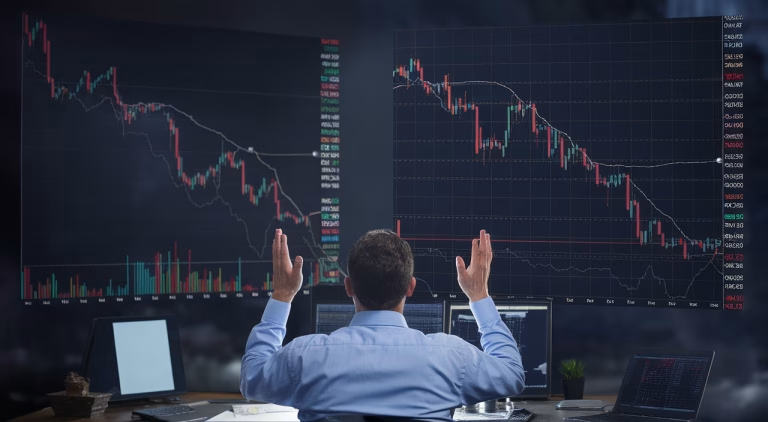
What is Anchoring Bias in Trading and How Can You Overcome It?
Anchoring bias in trading refers to our tendency to rely too heavily on specific reference points—or “anchors”—when making decisions. These anchors could be past prices, recent news, or arbitrary numbers that shouldn’t impact objective analysis. In trading, this often traps investors into poor entry or exit decisions, skewing portfolio performance and long-term gains.
TL;DR
- Anchoring bias occurs when traders fixate on an initial value, impacting rational decisions.
- It’s a cognitive bias deeply tied to human psychology and decision-making flaws.
- Common anchors in trading include historical prices, analyst estimates, or recent highs/lows.
- Bias can lead to abnormal returns and failure to capitalize on real market signals.
- We explore actionable strategies including mindset training, journaling, and scenario analysis.
- Case studies and real-life examples show how anchoring plays out in trading environments.
What is Anchoring Bias and How Does it Affect Traders?
Imagine you’re eyeing a stock that was trading at $100 just last week. Today, it’s down to $85. Something inside you whispers, “It’s got to go back up, right?” Welcome to the psychology of anchoring bias in trading. That arbitrary “$100” mark becomes your mental benchmark, clouding your ability to assess the value objectively.
This cognitive bias seeps into all corners of trading: entering a position based on historical highs, refusing to cut losses because a stock was once worth more, or holding onto assets during downturns because you’re mentally anchored to a past price.
The anchor becomes a psychological trap. Instead of asking, “What is this asset really worth today?” your brain clings to, “What was it worth before?” This leads to suboptimal decisions, loss aversion, and the infamous “hope and hold” strategy many traders adopt to their detriment.
A seminal study in behavioral finance found that even experienced investors are not immune. They unconsciously anchor on initial forecasts or past values—even when fresh data suggests otherwise. The result? Poor allocation of capital and missed opportunities in investment behavior.
Recognizing this bias is the first step; the next step is learning how to guard against it with a practical, psychological toolkit that transforms your trading psychology.

The Psychology Behind Anchoring Bias
Let’s dive under the hood of your brain and explore the psychology of anchoring bias in trading. Anchoring ties back to how our minds process information. When we’re unsure, we latch onto the first piece of data we encounter—that’s our anchor. Psychologically, it’s a shortcut, a heuristic. It saves brainpower. But in trading, those shortcuts often mislead us.
Anchoring isn’t solely about reference points—it’s about the emotional weight we attach to them. A previous high price feels like “safe territory.” A past low feels like a “bargain.” As contextual creatures, we’re wired to compare, not evaluate in isolation. That emotional tether often defies logic and impacts trading psychology.
Here’s what happens neurologically: When we see a price drop, our amygdala—responsible for emotional reactions—fires up. It compares the current price to your anchor, causing either excitement or fear. This biological reaction produces irrational confidence or hesitation, distorting your trading psychology and strategy.
The academic term for this behavior is “anchoring-and-adjustment heuristic.” People start with an implicit reference point and make incremental adjustments rather than full re-evaluations. But those adjustments are often insufficient, resulting in flawed conclusions that affect investment behavior.
As a trader, understanding these psychological triggers empowers you to recognize the moment your brain is leading you astray—and course correct your trading psychology.
Overcoming Anchoring Bias in Trading
Practical Strategies and Techniques
Now that you know what the psychology of anchoring bias in trading is and why it occurs, let’s talk about retraining your mind to sidestep it. It begins with awareness—but requires active strategies to fully escape its grasp and improve your trading psychology.
1. Use Data Over Memory: Ground your decisions in current fundamentals or technical indicators—not past price points. What does the chart or company data say right now about this investment behavior?
2. Scenario Planning: Anticipate outcomes from an unbiased perspective. Create objective ‘If-Then’ trading scenarios instead of emotional responses tied to past highs/lows. This strengthens your trading psychology.
3. Journaling and Post-Trading Analysis: Keep a decision journal. Write your entry rationale including what variables you’re anchoring on. Reviewing this helps break patterns over time and improves investment behavior.
4. Stop-Loss and Take-Profit Rules: Pre-set these levels based on strategy, not comparisons to previous prices. Let automation fight emotion in your trading psychology.
5. Timeframe Shifting: Shift to different timeframes when analyzing charts. A new vantage point forces your brain to refocus away from your original anchor and improves decision-making.
6. Mindset Training: Techniques like meditation, cognitive reframing, and deliberate thinking routines can disrupt the automatic nature of anchor-based decisions and enhance trading psychology.
In practice, it’s about creating friction between emotion and execution. The more structure you build into your trading system, the fewer decisions have to rely on judgment calls—making it harder for anchoring to sneak in and affect your investment behavior.
| Strategy | Description |
|---|---|
| Scenario Planning | Pre-determined responses to market changes reduce reactive bias. |
| Journaling | Tracks emotional anchors and their influence on outcomes. |
| Timeframe Shifting | Resets perspective, helping reduce dependence on past values. |
Real-Life Applications and Case Studies
Let’s bring this down from theory into the trenches of the real market. Consider this scenario: A trader named Alex bought TechCorp at $120. It dropped to $95 following weak guidance. Alex holds, convinced it will climb back. Weeks later, it hits $80. By the time he cuts losses, he’s anchored to $120—and bleeds capital waiting for a reversal that never came. This demonstrates poor investment behavior driven by cognitive bias.
Now compare that with Erin, who also bought TechCorp but with a pre-defined stop-loss at $98. She exited at $97, preserved her cash, and moved capital into better opportunities. Her decision wasn’t emotionally charged—it followed a rule-based system that neutralized anchoring bias and demonstrated strong trading psychology.
Another example comes from earnings season. Investors often anchor to analyst price targets. But these targets are just educated guesses. When results deviate, traders clinging to analyst narratives delay in adjusting their positions—despite market sentiment moving swiftly. This shows how cognitive bias affects investment behavior.
Professional traders often use algorithmic tools that eliminate emotional triggers entirely. However, retail traders can emulate these strategies through rule-based trading plans, self-note validations, and mental biases audits to improve their trading psychology.

Cost Guide: Psychological Tools and Resources
| Category | Example | Price Range |
|---|---|---|
| Trading Journals/Apps | Digital journaling tools | Free – $30/month |
| Courses and Webinars | Trading psychology programs | $50 – $500 |
| Books and eBooks | Behavioral finance literature | $10 – $40 |
| Coaching & Mentorship | Private sessions with trading coaches | $100 – $1000+ |
Final Thoughts: Making Rational Trading Second Nature
The psychology of anchoring bias in trading isn’t a flaw—it’s part of being human. But with awareness, discipline, and a few structured strategies, you can outmaneuver this cognitive bias and trade smarter. The markets reward rational, not emotional, decisions. Building a mindset rooted in awareness and psychology transforms good traders into great ones.
The key lies in layering processes—journaling, planning, visual reframing—until mental shortcuts fade into thoughtful decision-making. You’ll spend less time reacting and more time executing with clarity and confidence, improving both your trading psychology and investment behavior.
Frequently Asked Questions
- What is anchoring bias in trading? It’s the tendency to rely on a reference point—such as a past price—when making trading decisions, often leading to irrational choices.
- How can I recognize anchoring bias in myself? Look for patterns where decisions revolve around previous highs/lows or personal expectations rather than current data.
- What effect does anchoring bias have on returns? It creates suboptimal entries/exits and leads to abnormal returns due to emotional rather than strategic action.
- Are professionals immune to anchoring bias? No, even experienced traders are susceptible. The difference is they build systems to reduce its impact.
- What’s the fastest way to reduce anchoring bias? Implement journaling, use neutral data sources, and pre-plan trades before market hours.
- Does anchoring affect short-term or long-term trading more? Both. Day traders may react to hourly signals; investors may cling to older valuations.