
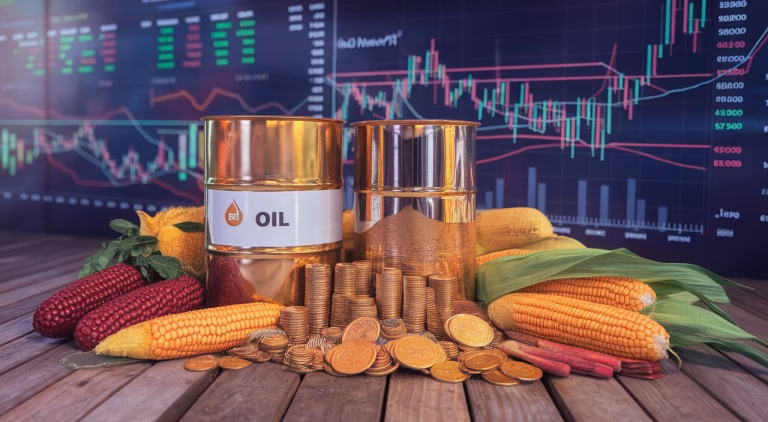
How can I invest in commodities without using futures contracts?
You can invest in commodities without jumping into the futures market by using exchange-traded funds, mutual funds, stocks of commodity-related companies, or even purchasing physical commodities like gold or silver directly. These methods offer exposure to commodity price movements while avoiding the complexity and risk of futures trading.
TL;DR
- You don’t need futures to invest in commodities—other options like ETFs, stocks, and physical ownership exist.
- ETFs and stocks tied to commodity sectors allow easy portfolio access without complex trading mechanics.
- Risk is still a factor—diversify and understand cost, liquidity, and volatility for each method.
- Physical ownership works best for metals like gold and silver, not oil or agriculture.
- Perfect for beginner and intermediate investors who want exposure to commodities as an inflation hedge or diversification tool.
Benefits of Investing in Commodities
Commodities can be a powerful tool to diversify your investment portfolio, especially during inflationary periods or when traditional markets underperform. Unlike stocks and bonds, commodities often react differently to economic changes. When inflation rises, for instance, the value of hard assets like gold tends to increase, providing a hedge against the falling value of money.
Learning how to invest in commodities without futures opens up opportunities that were once limited to sophisticated traders. We’re talking real-world, approachable entry points you can use today to build a more resilient portfolio.
Let’s break them down:
Physical Ownership

Owning physical commodities—think gold bars, silver coins, or agricultural land—is the most direct way to invest in commodities without futures contracts. For long-term holders who seek simplicity and want to avoid market noise, this method is appealing. You store the value. You hold it in your hands. But it adds complexities: physical storage, security, insurance, and liquidity. Selling physical silver isn’t as easy as clicking a button in a trading account.
Individual Securities
Another smart approach for how to invest in commodities without futures is buying companies that operate in the commodity space. For example, purchasing stock of a major copper mining company or an oil corporation gives you indirect exposure. As commodity prices rise, the profits—and stock prices—of these companies often benefit. This route simplifies entry but doesn’t fully track commodity prices due to other operational factors. It’s more like riding the commodity wave while wearing a corporate lifejacket.
Exchange-Traded Funds (ETFs)
ETFs designed around commodities provide broad or specific exposure without the need for futures contracts. Want to invest in energy? Find an ETF that tracks crude oil performance. Interested in diversification? Choose a basket ETF that includes various commodities. These are the favorite among modern investors due to accessibility, liquidity, and simplicity. Most operate like stock trades and are available via any brokerage platform.
Investment Strategies for Commodities
Here’s where it gets practical. How should you think about commodity investment strategies when you want to invest in commodities without futures? Let’s think beyond “buy and hope.” Commodity markets can be volatile and cyclical, and investors need a strategy, not just exposure.
- Sector Allocation: Bucket your commodity holdings by sector: energy (e.g., oil & gas), agriculture (e.g., wheat, corn), and metals (gold, silver, copper). Each behaves differently and reacts to various economic forces.
- Inflation Hedge: Allocate 5–10% of your portfolio to commodity ETFs during inflationary periods. These will tend to outperform cash or bonds in such environments.
- Dividend Strategy: Consider commodity-linked stocks that pay dividends such as mining firms or oil companies. You’ll earn income while riding commodity price trends.
- Thematic Rotation: Align with macroeconomic themes—when global demand surges post-recession, energy and soft commodities typically spike.
Real-world example: During periods of geopolitical uncertainty, gold ETFs like GLD or IAU often rise as investor appetite for safe-haven assets increases. You can mimic that trend without owning gold bars—no need for a vault at home!
Cost Guide: Investing in Commodities Without Futures
| Method | Low-End Cost | Mid-Range Cost | High-End Cost |
|---|---|---|---|
| Physical Gold or Silver | $100 (small coins) | $1,000 (bullion) | $10,000+ (full bars) |
| Commodity ETFs | $50 (buy-in) | $1,000+ | $100,000+ for institutional accounts |
| Commodity Stocks | $100 | $2,000 | $50,000+ |
Risks and Considerations

Regardless of how you choose to invest in commodities without futures, no investment is risk-proof. Commodities are sensitive to a broad range of risk drivers: geopolitical events, weather, shifts in production or supply chain logistics, and currency fluctuations.
Volatility: Commodities experience more dramatic price swings than stocks or bonds. Sudden geopolitical tensions can spike oil prices overnight or send them crashing just as fast.
Liquidity: Physical ownership may have slower exit times. ETFs offer more immediate trading options.
Tracking Error: ETF performance may slightly deviate from the actual commodity due to management expenses or derivative use.
Storage & Security: Physical gold and silver require safe storage and insurance, which adds cost.
Tax Treatment: Some commodity ETFs (especially those structured as partnerships) come with different tax reporting forms and implications.
Ultimately, understand what you’re buying and why. You aren’t just buying silver—you’re buying volatility, safety appeal, inflation hedge, and all the market speculation that rides along with it.
Conclusion
Learning how to invest in commodities without futures is not only possible—it’s increasingly practical for the everyday investor. Whether you prefer the tactile feel of a gold coin, the convenient click-to-buy of a commodity ETF, or the indirect path through mining and energy stocks, options abound.
You can leverage these tools to capture upside from global trends, hedge against inflation, and enhance the balance in your investment portfolio. And you can do all that without needing a futures trading desk or complex knowledge of options trading.
The key is strategy—entry points based on your risk threshold, investment goals, and market understanding. Build your plan, remain diversified, and put your financial future on solid ground—commodities and all.
Frequently Asked Questions
- Can you trade commodities without futures?
You certainly can. Through ETFs, mutual funds, individual stocks, and physical ownership, investors can gain exposure to commodity markets without using futures contracts. - Which commodity ETFs are the safest to start with?
Broad commodity ETFs that track a range of resources—like energy, metals, and agriculture—offer diversified exposure and are usually less volatile than single-commodity alternatives. - Is owning physical gold better than buying gold stocks?
It depends on your goal. Physical gold offers direct ownership and inflation protection while gold stocks provide the potential for higher returns due to company profitability but come with extra corporate risk. - How much of my portfolio should I allocate to commodities?
For most investors, 5–10% exposure to commodities provides solid diversification without overloading risk. - Do commodity ETFs track the actual price of commodities?
Some do, but others use futures contracts or indexes that may introduce slight tracking differences. It’s crucial to understand the ETF structure before investing. - Can beginners invest in commodities without high risk?
Yes, by choosing broad-based ETFs or commodity mutual funds with lower volatility and by avoiding leveraged or inverse products. - What’s the best strategy for investing in commodities long-term?
Diversified exposure via commodity ETFs or sector stocks combined with regular portfolio rebalancing is a strong foundational strategy.

