

What is the optimal rebalancing frequency for my investment portfolio?
Your optimal rebalancing frequency is the strategic interval that keeps your portfolio aligned with your target allocation while minimizing taxes, transaction costs, and supporting your long-term investment goals. The right frequency balances effective risk control and growth potential with the practical costs of rebalancing. For most investors, calculating rebalancing frequency leads to rebalancing every 6 to 12 months—or when asset allocations drift significantly from your targets.
TL;DR—Key Takeaways on Optimal Rebalancing Frequency
- Optimal rebalancing frequency depends on your risk tolerance, asset allocation, tax implications, and transaction costs.
- Calendar-based portfolio management strategies (quarterly, semi-annual, annual) work best for most individual investors.
- Threshold-based rebalancing (adjusting only when allocations drift a set percent from target) reduces costs and taxes effectively.
- Excessive rebalancing erodes returns due to increased tax implications and transaction costs.
- Strategic rebalancing supports discipline, risk control, and long-term growth objectives.
Understanding Portfolio Rebalancing
Importance of Rebalancing

Think of your investment portfolio as a carefully orchestrated symphony. At the start, every instrument plays in perfect harmony—but over time, some sections get louder while others fade. In investing, the same thing happens when stocks, bonds, and other assets grow at different rates, causing your risk and return profile to drift from your original plan.
Portfolio rebalancing is the disciplined process of realigning your investments back to your chosen allocations. When stocks surge, you might sell some to purchase underperforming bonds, locking in gains and controlling risk. The real power comes from protecting your downside during market swings and keeping your investment approach intentional rather than driven by emotion or momentum. Effective portfolio management strategies through rebalancing provide a systematic framework for “buying low and selling high” without relying on market timing or guesswork.
Factors to Consider
Mastering your optimal rebalancing frequency requires balancing multiple factors that directly impact your returns. Here are the essential elements you need to evaluate:
- Risk tolerance: Aggressive investors may tolerate larger allocation drift, while conservative investors prefer more frequent rebalancing.
- Time horizon: Approaching retirement? More frequent rebalancing helps protect your gains; longer horizons allow for wider portfolio swings.
- Asset volatility: High-volatility portfolios may require more frequent attention to maintain your target allocation.
- Tax implications: Taxable accounts require careful timing to minimize the tax burden on your returns.
- Transaction costs: Every trade carries costs that eat into your returns, making cost-efficient strategies essential.
Every investor’s situation is unique, but these core considerations will guide you toward a system that delivers results without unnecessary costs or risk exposure.
Calculating Your Optimal Rebalancing Frequency
So how do you calculate rebalancing frequency that maximizes your returns? There’s no one-size-fits-all answer, but you can find your sweet spot by examining proven strategies and their impact on long-term wealth building.
- Calendar-based approaches: This strategy means rebalancing at set intervals—quarterly, semi-annually, or yearly. For most individuals, annual or semi-annual schedules balance discipline with cost efficiency.
- Threshold-based triggers: You only rebalance when a specific allocation shifts beyond your set limit (like when stocks move 5% from target). This approach minimizes transaction costs and tax implications but requires active monitoring.
- Hybrid portfolio management strategies: Combine both methods by rebalancing at regular intervals unless allocations exceed your threshold first. This delivers discipline with flexibility for optimal results.
Consider the real-world impact: If you set an annual rebalance schedule, you’ll likely experience less drift from your risk profile and avoid costly impulsive trading. However, if you rebalance after every 2% drift, you may trade too frequently—potentially raising transaction costs and tax implications without meaningfully boosting your returns, especially in tax-sensitive accounts.
When learning how to calculate rebalancing frequency, remember there’s no universal perfect answer. Instead, carefully weigh your personal goals, analyze historical performance, and focus on after-tax, after-cost returns rather than just pre-tax performance numbers.
Determining the Right Trigger
Choosing the best time to rebalance your investment portfolio means setting the optimal trigger—either a time-based schedule or percentage drift threshold. Here’s how to determine which approach fits your investment strategy:
- If you value simplicity: Annual or semi-annual rebalancing provides a predictable routine that’s easy to automate and integrate into your financial planning.
- If you want to minimize transaction costs: Threshold-based methods reduce unnecessary trades during stable market periods. For example, set a 5% trigger—if your US stock target is 40%, you only rebalance when it drops below 35% or exceeds 45%.
- If you use tax-advantaged accounts: More frequent rebalancing poses less risk of immediate tax consequences, giving you greater flexibility in your trading decisions.
- For taxable accounts: Favor fewer, larger rebalancing events to minimize tax implications from capital gains.
| Rebalancing Model | Example Trigger | Who it Fits |
|---|---|---|
| Annual | Every year on chosen date | Most long-term investors |
| Semi-Annual | Every 6 months | Medium-risk or approaching retirement |
| Threshold | 5% drift from target | Active managers or large portfolios |
| Hybrid | Annual or 5% drift, whichever comes first | Tax-aware investors seeking balance |
In our experience, investors who establish a clear trigger develop stronger rebalancing discipline and avoid the “just this once” mentality that leads to inconsistent results. The goal is making rebalancing an automatic habit rather than an emotional decision.
Strategies for Effective Portfolio Management
Rebalancing forms just one pillar of successful investing, but integrating it with other effective portfolio management strategies creates a powerful engine for long-term returns. Here are proven approaches you can implement immediately:
- Core-satellite structure: Use stable, broad-based funds as your core holdings, then add “satellite” allocations for specialized assets. Rebalance the core regularly while reviewing satellites less frequently.
- Dynamic rebalancing: Adjust your rebalancing rules as your financial situation evolves, such as rebalancing more frequently as you approach major financial goals.
- Automated tools: Many platforms offer automatic rebalancing features that ensure discipline, but verify settings align with your goals and minimize unnecessary trades.
- Document your strategy: Write down your chosen optimal rebalancing frequency and review it annually. A written policy keeps you rational during market turbulence.
What typically happens: Investors who establish clear portfolio management strategies rarely regret their systematic approach. Even during sharp market rallies or volatility, having a documented plan breeds confidence and prevents costly emotional reactions.
Minimizing Taxes and Transaction Costs
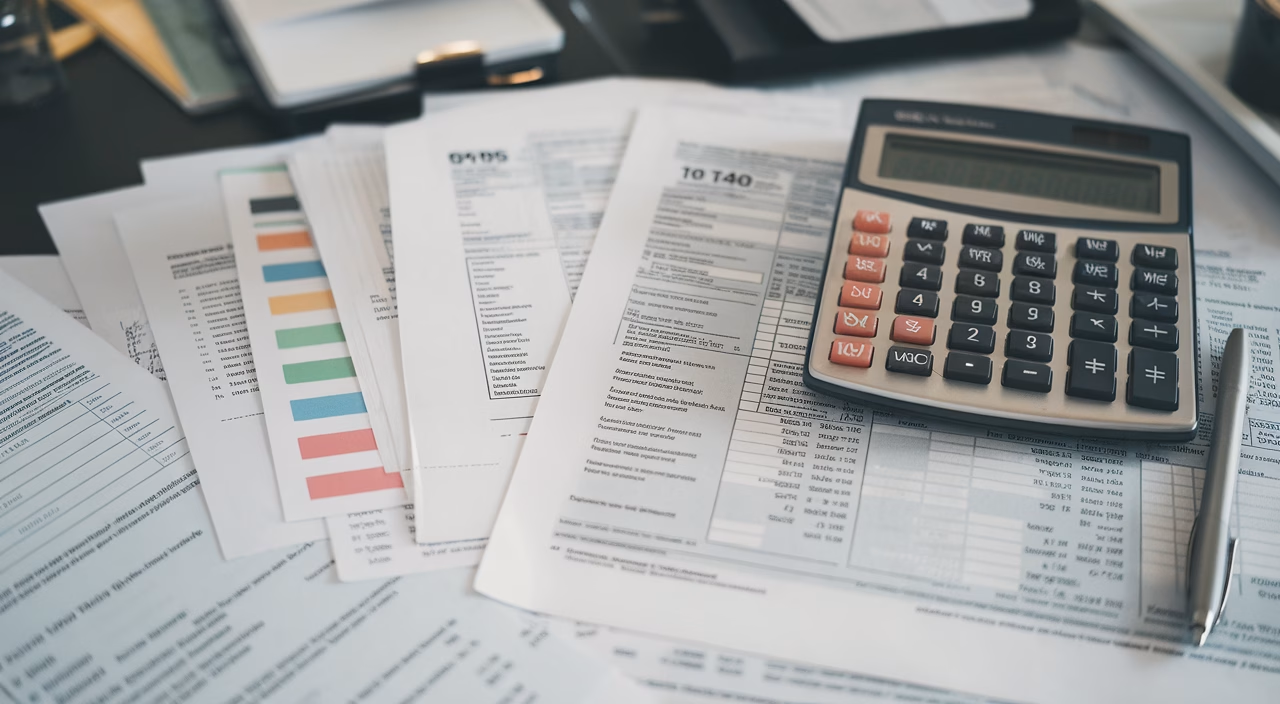
Tax implications and transaction costs are silent competitors against your portfolio’s growth. Here’s how to prevent them from eroding your returns while maintaining your optimal rebalancing frequency and investment objectives.
- Prioritize tax-advantaged accounts for rebalancing: Conduct most rebalancing in IRAs or other tax-deferred vehicles to avoid immediate tax implications from capital gains.
- Implement strategic tax-loss harvesting: In taxable accounts, offset gains with losses from other positions during your rebalancing periods.
- Execute larger, less frequent transactions: This approach reduces commission fees, bid-ask spreads, and tax implications from frequent small trades.
- Choose cost-efficient platforms: Transaction costs vary significantly between brokers—lower costs compound your savings over time.
- Consider charitable giving strategies: Donating appreciated assets instead of cash can meet rebalancing needs while reducing your tax burden.
| Action | Tax Impact | Cost Impact |
|---|---|---|
| Annual rebalance (IRA) | None | Low (fewest trades) |
| Quarterly rebalance (taxable) | Short-term capital gains | Higher (more trades) |
| Threshold >5% (taxable) | Potential LTCG/offsetting losses | Variable (depends on market) |
Long-Term Growth Goals
The purpose of calculating your optimal rebalancing frequency isn’t just mathematical precision—it’s about positioning your portfolio for sustained growth through all market conditions. Proper rebalancing discipline protects against “winner’s curse” (overexposure to a surging asset just before a downturn) and maintains the diversification that’s central to effective portfolio management strategies.
The research shows compelling results: Portfolios that rebalance at optimal frequencies often achieve superior risk-adjusted returns compared to “set and forget” approaches. Studies analyzing performance over extended periods found that annual and threshold-based strategies protected investors from devastating losses during bear markets while still capturing broad bull market gains.
However, balance is crucial for long-term growth. If you chase every market fluctuation by rebalancing weekly, the transaction costs and tax implications may overwhelm any benefits. Conversely, if you never rebalance, your risk profile becomes distorted, potentially trapping you in unintended positions. Most successful long-term investors discover that rebalancing every 6 to 12 months, combined with a built-in threshold (typically 5-10%), achieves optimal harmony between growth and capital preservation.
| Rebalancing Frequency | Historical Return* | Drawdown Control | Cost/Tax Exposure |
|---|---|---|---|
| Quarterly | Moderate | Very high | Highest |
| Semi-Annual | Strong | High | Moderate |
| Annual | Strong | Moderate to High | Lower |
| Threshold (5–10%) | Comparable to annual | Moderate | Lowest |
*Returns and benefits reflect average outcomes in core global diversified portfolios; specific results vary.
Cost Guide: Rebalancing and the Price of Discipline
Understanding the true cost of maintaining your optimal rebalancing frequency helps you budget effectively and choose the most cost-efficient approach across different platforms and account types:
| Cost Level | Trade Commissions | Tax Consequence | Who it Fits |
|---|---|---|---|
| Low-cost | $0 (in no-commission accounts) | None (in IRA/401k) | Automated strategies or tax-advantaged accounts |
| Moderate-cost | $5–$15 per trade | Long-term capital gains | Taxable accounts, moderate frequency |
| High-cost | $25+ per trade | Short-term gains (higher rate) | Frequent or complex, multi-asset portfolios |
Pro tip: Always calculate the total cost (trade fees plus estimated tax implications) before executing a rebalance. If expenses exceed the performance benefit from correcting allocation drift, consider waiting until your next scheduled interval or threshold trigger.
Final Thoughts: Building Discipline for Lasting Wealth
Calculating your optimal rebalancing frequency isn’t about achieving perfection—it’s about implementing a disciplined strategy that compounds wealth over time while protecting your downside. As you determine your personal optimal rebalancing frequency, remember that the most effective system is one you can follow consistently without second-guessing every market headline.
Whether you choose annual, semi-annual, threshold-based, or hybrid portfolio management strategies, document your process and commit to regular reviews. This disciplined approach distinguishes successful long-term investors and ensures your portfolio works systematically toward your financial goals.
Frequently Asked Questions
- What is the best frequency to rebalance a portfolio?
For most investors, the optimal rebalancing frequency is once or twice yearly combined with a drift threshold of 5-10%, providing excellent discipline, cost control, and risk management. - How do taxes impact rebalancing?
Tax implications in taxable accounts can significantly impact returns from frequent rebalancing. Using tax-advantaged accounts or minimizing trading frequency helps reduce this performance drag. - What are the main transaction costs when rebalancing?
Primary transaction costs include trade commissions, bid-ask spreads, and account fees. Choosing low-cost brokers and consolidating trades effectively reduces these expenses. - Is threshold-based or calendar-based rebalancing better?
Both methods work effectively; your choice should depend on portfolio size, transaction costs, time availability, and tax situation. Many successful investors combine both approaches. - Can I automate portfolio rebalancing?
Yes—many investment platforms offer automatic rebalancing, particularly for retirement accounts. Ensure automated settings match your optimal rebalancing frequency and tax considerations. - How do I calculate when to rebalance my investments?
Monitor your portfolio allocation regularly against your targets. When an asset drifts beyond your chosen percentage threshold (typically 5-10%) or at your scheduled interval, it’s time to rebalance. - Will rebalancing hurt my returns?
When executed properly, rebalancing enhances long-term risk-adjusted returns. While transaction costs and tax implications can reduce short-term performance, disciplined rebalancing typically improves overall portfolio outcomes.

