

What Is Geographic Diversification and Why Does It Matter for Wealth Building?
Geographic diversification is the strategy of spreading your investments across various countries and regions to reduce risk and maximize your potential returns. The simple truth is: markets move in cycles, and no single economy or region outperforms forever. By diversifying geographically, you are not just avoiding putting all your eggs in one basket—you are setting yourself up to benefit from global market opportunities and weathering local downturns more smoothly. Most wealthy investors, and increasingly every thoughtful beginner, are realizing that to truly build lasting wealth, you need exposure to more than just your home turf. This is not just about minimizing losses; it is about opening up doors you did not know existed—emerging markets, innovative industries, and resilient economies worldwide.
TL;DR
- Geographic diversification spreads your investments across countries to reduce the impact of local risks.
- International investing opens the door to higher potential returns and unique growth opportunities.
- Diversifying globally creates a balanced risk profile, shielding your portfolio from single-market volatility.
- This guide covers how to invest internationally for beginners, top global markets to consider, and actionable steps for effective risk management.
- Learn from real-world success stories, recent case studies, and get practical tips for building your globally diversified portfolio today.
Introduction: Why Geographic Diversification Is Essential
Picture this: you have built a comfortable local portfolio, but news breaks—a recession is looming, or sudden tax changes threaten your favorite domestic sectors. Without global exposure, your entire nest egg could wobble. That is the risk of concentration. Geographic diversification is like having financial passports to different countries: if one economy hits turbulence, another may be powering ahead. Just as a nutritious diet includes variety, so too does a robust investment plan. If you have ever wondered how the world’s wealthiest shields against market shocks, the answer is almost always smart international investing.
Let’s face it, home-country bias (the tendency to over-invest where you live) is as natural as rooting for your local team. But overexposure to a single market leaves you vulnerable—one policy change or disaster, and fortunes can flip. On the flip side, information and technology have made global investing more accessible than ever. Whether you are curious about how to invest internationally for beginners, or you are seeking proven strategies for balanced risk portfolio management, embracing geographic diversification can provide both a safety net and a springboard for stronger returns. Our journey together will demystify global investing, help you spot opportunities, and show you how to start—even if you are feeling a little overwhelmed right now.
Understanding the Basics: What Is Geographical Diversification?
At its core, geographic diversification involves selecting investments from multiple geographic regions—think North America, Europe, Asia, emerging markets, and beyond. Instead of relying solely on the fortune of one country or local economy, you invest across borders, industries, and currencies. Why is this vital? Because economies do not always move in lockstep. Japan’s lost decade did not mimic America’s dotcom boom; while European markets endured the financial crisis, many Asian economies recovered quickly. If your portfolio had exposure to both, you would have balanced those blips.
Beginner investors might ask, how do I actually invest internationally? Here is what often happens: you start with familiar local companies or index funds. But with today’s global brokerage platforms and international ETFs or mutual funds, accessing foreign markets—even with modest amounts—is straightforward. It is not about betting the farm overseas, but intentionally allocating a portion of your wealth to different geographies to enhance resilience and returns. Traditional wisdom often splits assets between domestic and global holdings in ratios like 60/40 or 70/30—though your personal balance will depend on your risk tolerance and financial goals.
In practice, you will notice that successful portfolios are not static: they adapt as markets shift, emerging regions thrive, or economic winds change. Geographic diversification is not a one-and-done decision, it is an evolving process that helps you capture the best of worldwide prosperity while guarding against local pitfalls. If you are new to this, do not worry—we will break down exactly how to invest internationally for beginners in the next sections.
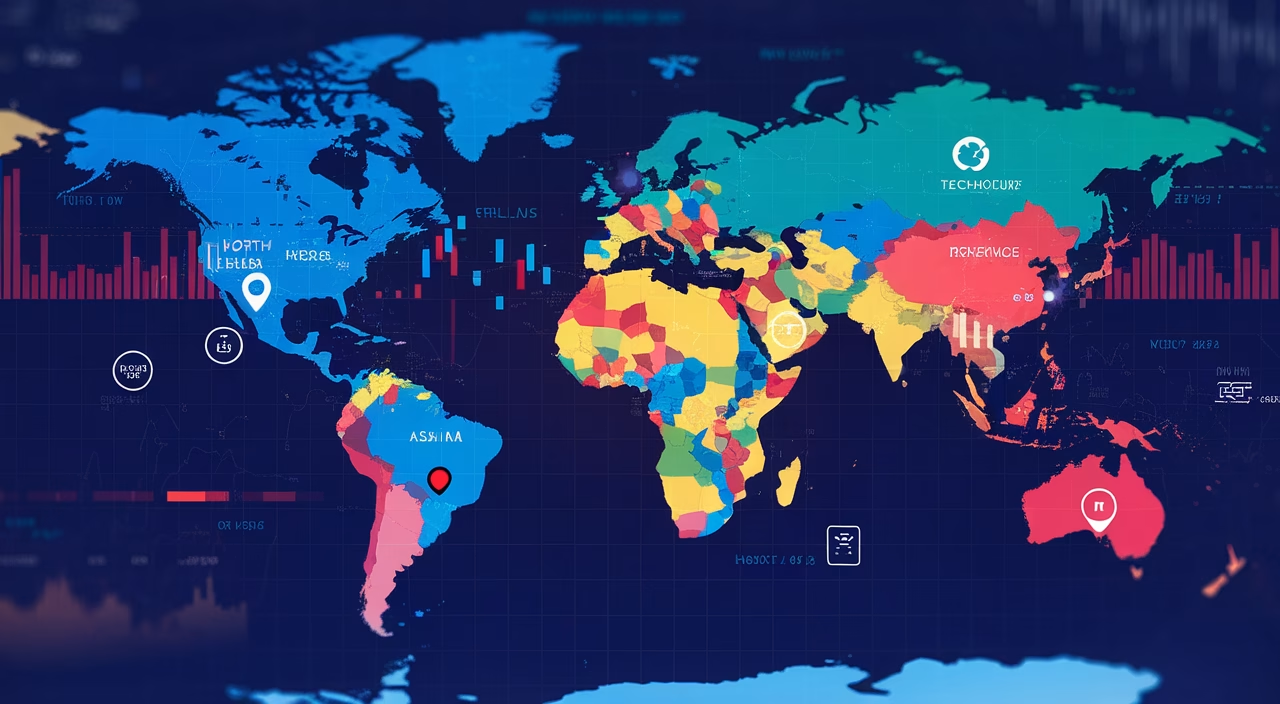
Benefits of International Investing: Balancing Risk and Maximizing Returns
The world is not evenly synchronized. Different markets march to their own drummers. This means international investing can smooth out the bumps in your portfolio’s ride. When Europe struggles, Latin America might boom. When US tech stocks cool, Asian manufacturing could heat up. This geographic diversification can help you create a more balanced risk profile, reducing the chance that a rough patch in one market will wipe out your hard-earned gains.
Let’s dive deeper. As you explore global opportunity, you are not just seeking to avoid loss—you are going after untapped growth and innovative sectors. For example, emerging markets often have higher growth rates, albeit with more volatility. Developed nations can offer more stability. Together, they can provide both a safety net and a growth engine for your investments.
- Reduced Volatility: Exposure to multiple economies means your portfolio is less likely to experience wild swings based on a single country’s news.
- Higher Potential Returns: Over the long term, regions rotate in and out of favor; international investing lets you participate in growth wherever it occurs.
- Hedge Against Currency Risk: Holding foreign assets can offer protection if your home currency falls in value.
- Broader Opportunity Set: Some of the world’s most innovative companies or fastest-growing sectors are found far beyond your local borders.
Here is what often happens: during prolonged local recessions or market corrections, globally diversified portfolios maintain their footing—or even see positive momentum—when local-only investors falter. This is not hypothetical; research consistently shows that portfolios with diversified geographic exposure outperform in terms of risk-adjusted returns, especially across market cycles.
Top Global Markets to Explore: Opportunities for Diversification
So, where should you look if you want to diversify for balanced risk and potential returns? The global marketplace offers a rich menu of regions, each with its own risk, reward, and investment characteristics. Below is a look at key global markets, including recent strengths, standout sectors, and what makes them appealing for diversification.
| Global Region | Key Industries | Characteristics | Why Consider? |
|---|---|---|---|
| North America | Technology, Healthcare, Industrials | Stable, Innovative, Liquid | Strong regulatory protection and global leaders in innovation. |
| Europe | Pharma, Energy, Financials | Established, Dividend focus | Diversified across economies, defensive sectors thrive in volatility. |
| Asia-Pacific | Manufacturing, Tech, E-commerce | High growth, Emerging middle class | Exposure to fast-growing markets and emerging innovators. |
| Latin America | Mining, Agriculture, Consumer | Resource-rich, Volatile but high reward | Potential for outsized returns during commodity upswings. |
| Middle East/Africa | Energy, Infrastructure | Resource-driven, Frontier risk | Unique global diversification opportunities and currency hedges. |
When assessing these global markets, consider your risk tolerance and timeframe. North America tends to offer safety and innovation, while regions like Asia-Pacific and Latin America add high-octane growth (with more risk). For example, over the last decade, investors who maintained a solid portion of their portfolio in Asia-Pacific enjoyed growth surges that far outpaced many Western markets. But remember, these returns came with higher volatility. That is why building a balanced mix is key—drawing a little from everywhere lets you maximize potential while keeping risk in check.
Practical tip: Use index funds or exchange-traded funds (ETFs) designed for specific regions or market sectors. These make it easy—even for beginners—to gain broad exposure without hand-picking individual stocks in foreign markets.
Implementing Successful Strategies: Practical Tips for Beginners
Feeling inspired to get started but not sure where to begin? Here are proven strategies for balanced risk portfolio management and simple steps any investor can follow, even with limited international investing experience.
- Start Small with Global Funds: Consider broad-based international index funds or ETFs as a first step. They provide instant access to dozens or hundreds of companies spread across many countries.
- Balance Diversification with Risk: Do not stretch too far too fast. A solid starting point for beginners might be 20-40% of your equity exposure allocated internationally. Adjust this as you gain comfort and expertise.
- Rebalance Regularly: Markets change, and so will your portfolio’s composition. Set a schedule (semi-annual or annual) to rebalance, ensuring no single sector or region dominates.
- Consider Currency Risk: Some international funds hedge currency risk; others do not. Be mindful of how currency swings could affect your returns.
- Research Local Regulations and Taxes: Different countries have different rules for international investors. Make sure you understand tax implications and any restrictions before investing.
You might be wondering, how to invest internationally for beginners—without getting overwhelmed by complicated rules or risky bets? Many investors start by selecting a global ETF or a mutual fund managed by a reputable institution, which pools assets from many investors to gain broad international exposure. This approach provides built-in geographic diversification, professional management, and often lower fees than actively managed regional funds.
Here is what we see with new clients: the biggest roadblock is not the mechanics—it is the uncertainty. Take it step by step. Begin with familiar, diversified products, and use time (not just geography!) as your ally. The world will not change overnight, but your portfolio can steadily evolve to capture worldwide potential. With each new region added, you gain both opportunity and protection—two pillars of lasting wealth.
Cost Guide: How Much Does International Investing Cost?
Investing across global markets does come with expenses—some expected, some less obvious. Here is a quick table summarizing the common cost tiers you might encounter:
| Cost Category | Low-End | Mid-Range | High-End |
|---|---|---|---|
| International ETFs/Index Funds (annual fee) | 0.10% | 0.20 – 0.50% | 0.80%+ |
| Direct Stock Trading Fees (per trade) | $0 | $5 – $15 | $25+ |
| Currency Conversion Fees | 0.10% | 0.50 – 1.00% | 2.00%+ |
| Tax Withholding (foreign dividends) | 0% | 10 – 15% | 30%+ |
Practical advice: Look for international funds with low expense ratios and check your broker’s fee schedule for foreign transactions. For most beginners, total costs can be kept low with ETFs or mutual funds, especially when avoiding frequent trades. Remember, lower fees mean a higher share of your investment compounding for the future.
Case Studies and Success Stories: Real-Life Examples of Wealth Building Through Diversification

It is always easier to learn from real-world scenarios. Let’s see geographic diversification in action with a few approachable, beginner-friendly examples.
Case Study 1: The Resilient Retiree
A retiree had most of his savings in domestic stocks. During a local recession, his portfolio took a hit. After consulting a strategist, he shifted 35% of his assets to international funds spanning North America, Europe, and Asia. The impact? While domestic equities continued to struggle, his globally balanced portfolio rebounded thanks to growth in Asia-Pacific and steady performance from Europe. Not only did this approach cushion losses, but it provided exposure to new opportunities he had not previously considered.
Case Study 2: The Ambitious Young Saver
A novice investor started with a global ETF holding exposure to over 40 countries. By contributing small amounts monthly and regularly rebalancing, she smoothed out volatility from individual market swings. Over five years, when her home market lagged, her international allocation delivered steady gains. While not immune to downturns, her overall risk-adjusted returns were significantly higher compared to friends concentrated in one market.
Case Study 3: The Entrepreneurial Thinker
Another client, running a small business, faced sector-specific slowdown. He invested in sector-focused funds abroad—recession-resilient healthcare in North America, rising e-commerce stars in Asia, and resource funds in Australia. This patchwork of global allocations helped him weather his home sector’s slump and even outpaced broader benchmarks in a tough year.
The lesson is clear: by diversifying across regions, you are not just dampening risk—you are seeding possibilities for wealth creation in places and ways that a home-only strategy cannot match.
Conclusion: Creating a Secure Financial Future Through Geographic Diversification
Building a future-proof portfolio hinges on understanding that no single market will always deliver. Geographic diversification is the secret sauce in successful wealth creation: it spreads risk, broadens opportunity, and offers access to the most promising global trends—well beyond the boundaries of local markets.
Whether you are a beginner or have years of experience, now is the right time to look beyond your backyard. Start with simple tools, broaden with intention, and rebalance as your financial journey unfolds. With a global mindset, you will ride out storms more smoothly and capture the world’s best opportunities. Remember: every step towards international investing is a step towards a more balanced, resilient financial legacy.
Frequently Asked Questions (FAQs)
- What is geographic diversification, and how does it benefit my investments?
Geographic diversification means spreading your investments across various countries and regions to reduce risk and enhance growth. It shields your portfolio from local downturns and opens doors to global opportunities. - How can I start investing internationally as a beginner?
Begin by exploring global index funds or ETFs that track international markets. These offer simple, cost-effective diversification—ideal for new investors. - Which are the top global markets for diversifying my investments?
Key regions to consider include North America (tech and healthcare), Europe (pharma, energy), Asia-Pacific (manufacturing, tech), Latin America (mining, agriculture), and Middle East/Africa (energy, infrastructure). - What are the main risks of international investing?
Risks include currency fluctuations, country-specific regulations, and local market volatility. Using broad funds and regular rebalancing can help control these risks. - What are proven strategies for balanced risk portfolio management?
Allocate a portion (e.g., 20-40%) of your portfolio internationally, use diversified ETFs/funds, rebalance regularly, and research the regulatory landscape. - How much does it cost to invest internationally?
Costs can range from very low (via ETFs, at 0.10–0.50% annual fees) to higher, depending on fund type and transaction fees. Always check for hidden costs like currency conversion or tax withholding. - What is the 8 4 3 rule for wealth creation?
This rule encourages dividing your portfolio into 8 high-quality stocks, 4 solid funds/ETFs, and 3 international or alternative assets—promoting a blend of safety, growth, and global exposure for balanced wealth building.

